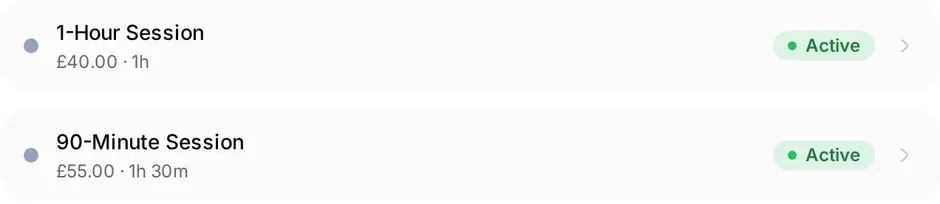
 1-hour session at £40
Your services, priced and timed
1-hour session and 90-minute session each carry a price, a length and a category, ready to book online.

Students and parents book lessons online and keep a weekly slot, reminders cut cancellations and your week sorts itself while you teach.
No commission on new clients. No per client charges.
One monthly subscription. 2.5% + 35p on standard UK cards, only when you take a card payment.

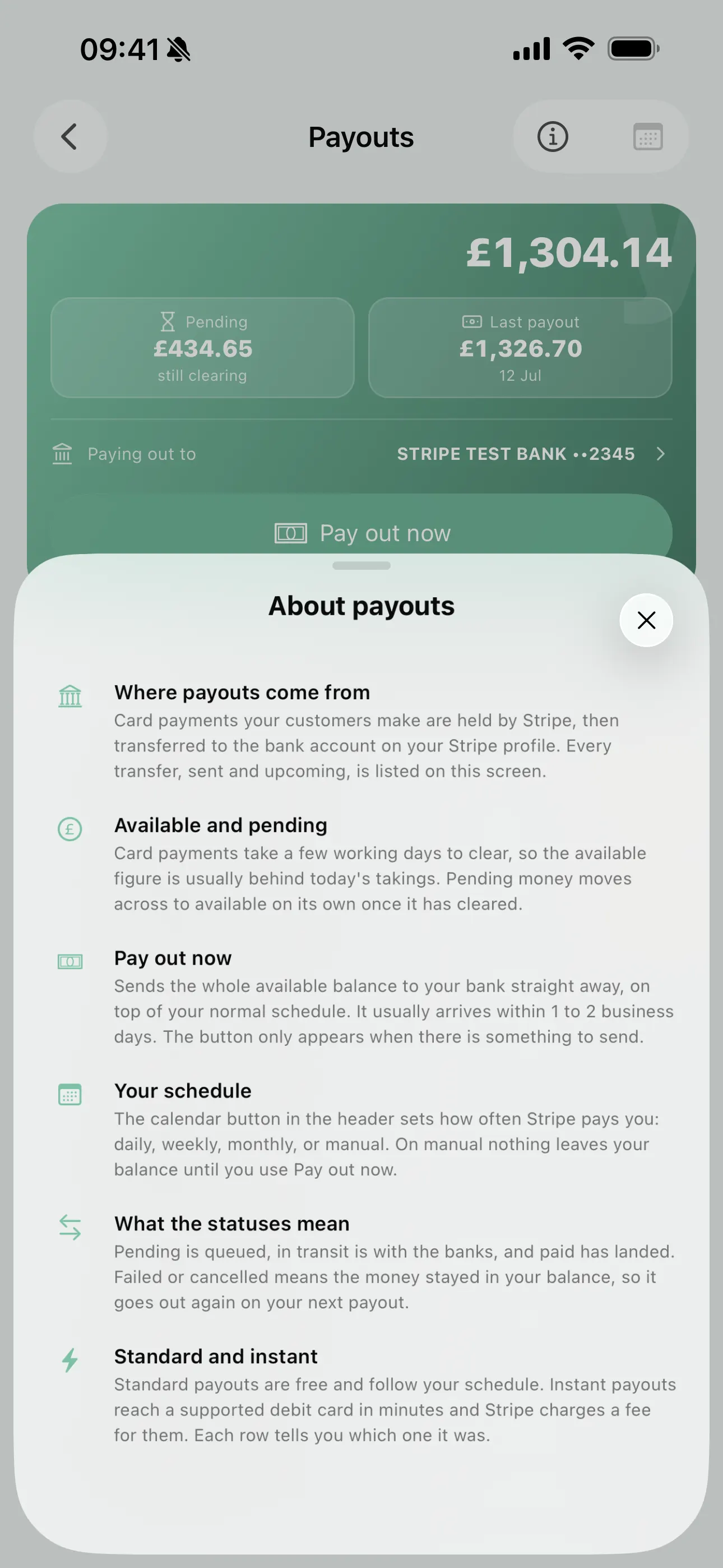
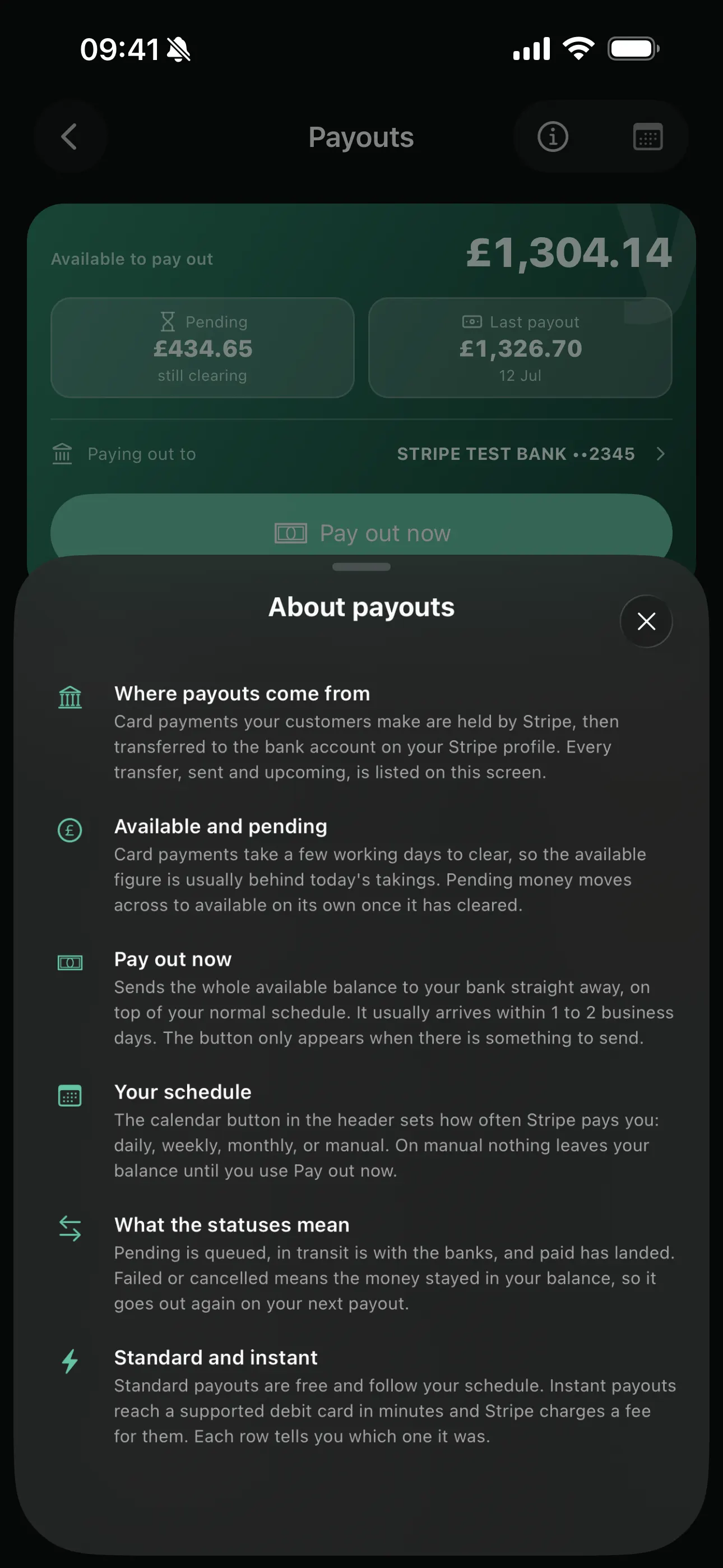
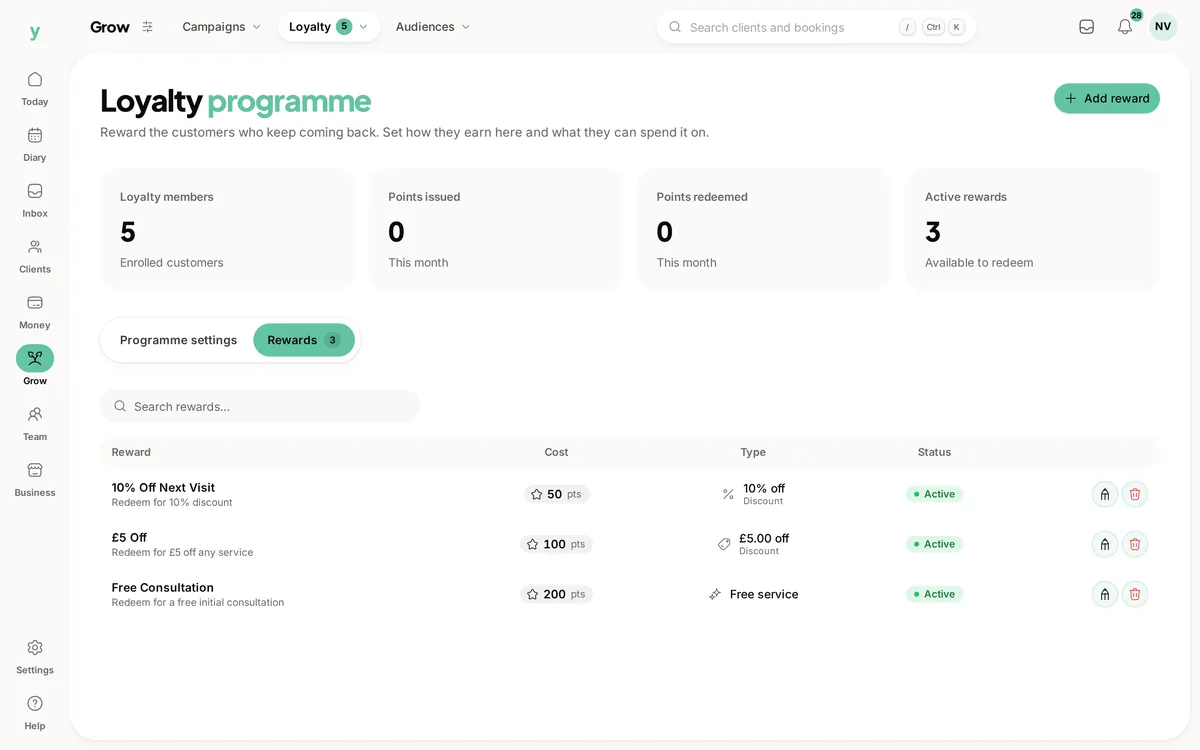
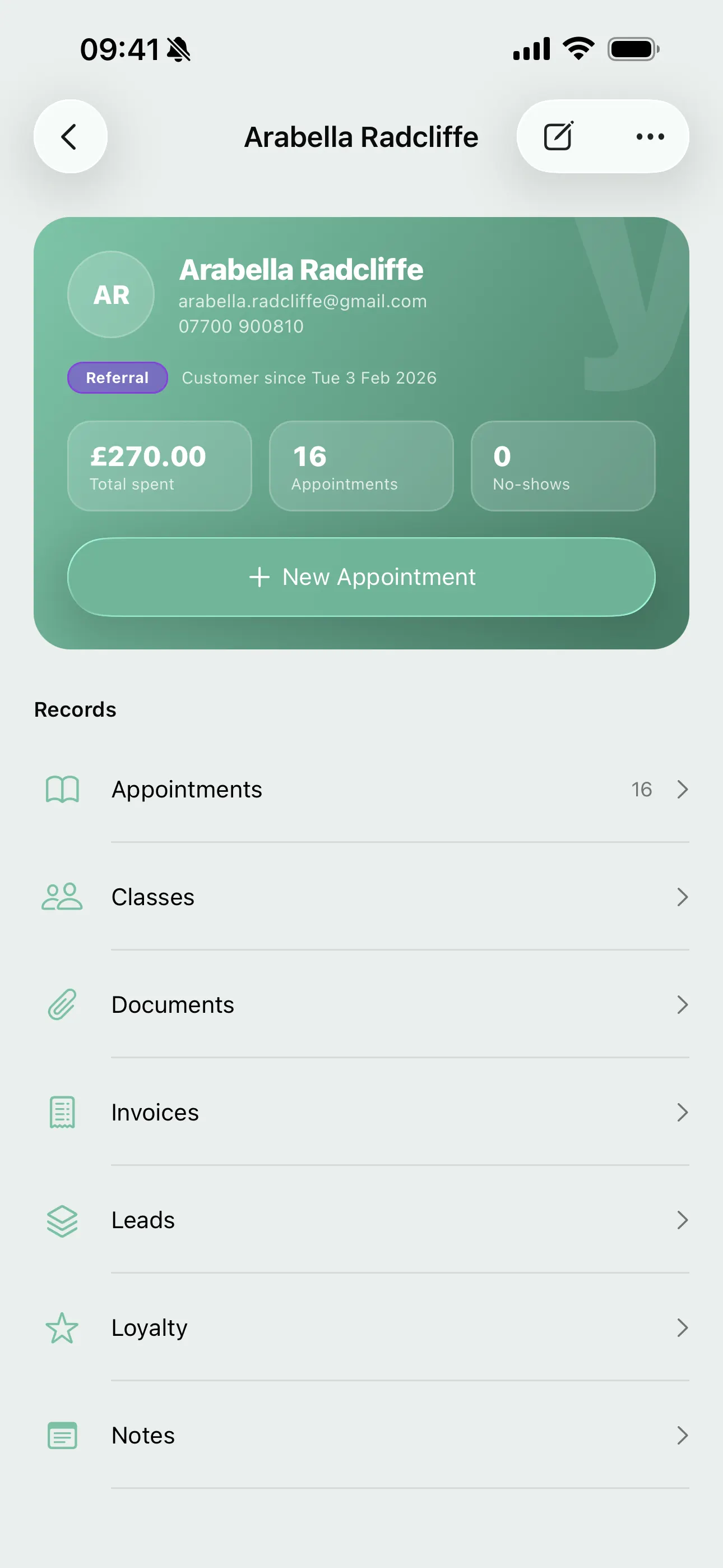
Real screens from BrightSpark Tutoring, our demo tutoring business, with the numbers it shows today.
1-hour session at £401-hour session and 90-minute session each carry a price, a length and a category, ready to book online.
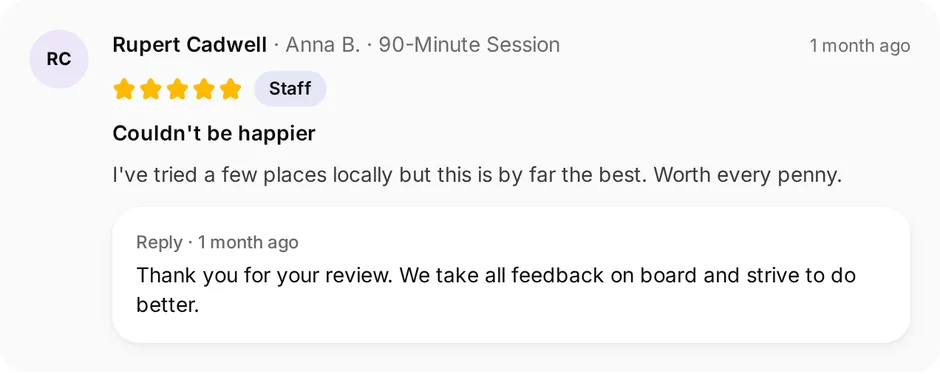 Replied to from the app
Every review names who it was with and what was booked, this one for 90-minute session. Reply from the same screen.
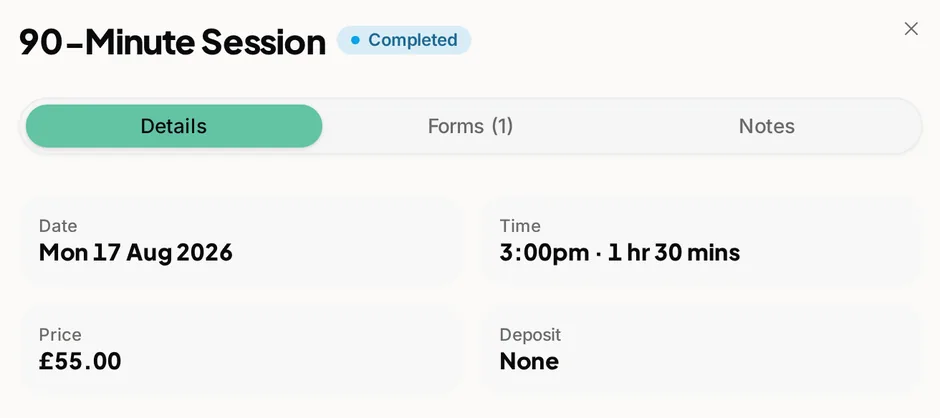 90-minute session, 1 hr 30 mins
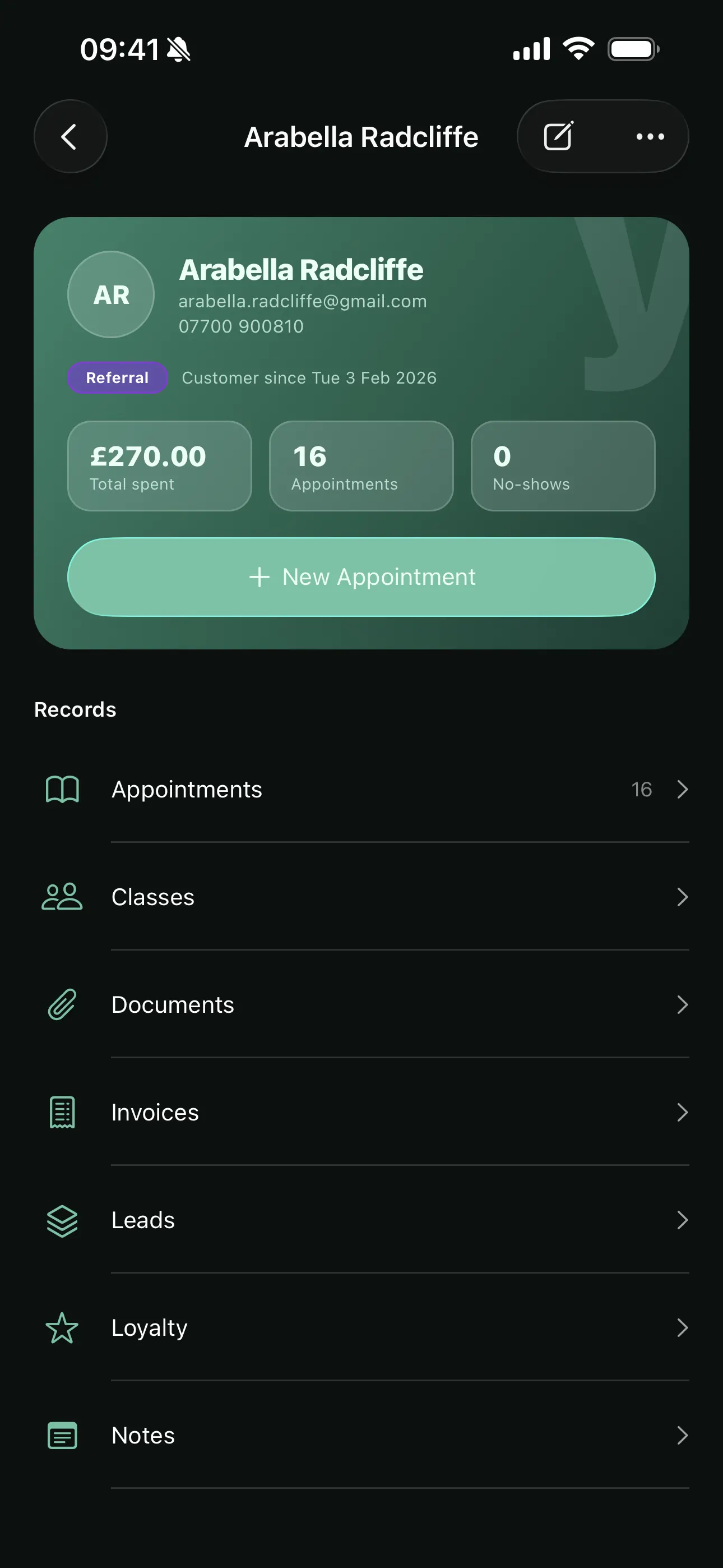
Open any appointment to see the service, time, length, price and deposit, with the client and their history a scroll away.
Students book single lessons online or keep a weekly slot charged to a saved card, so your week fills itself. Recurring slots keep regulars in the same time and reminders keep everyone on schedule.
No commission on new students. No per student charges.
One monthly subscription. 2.5% + 35p only when you take a card payment.
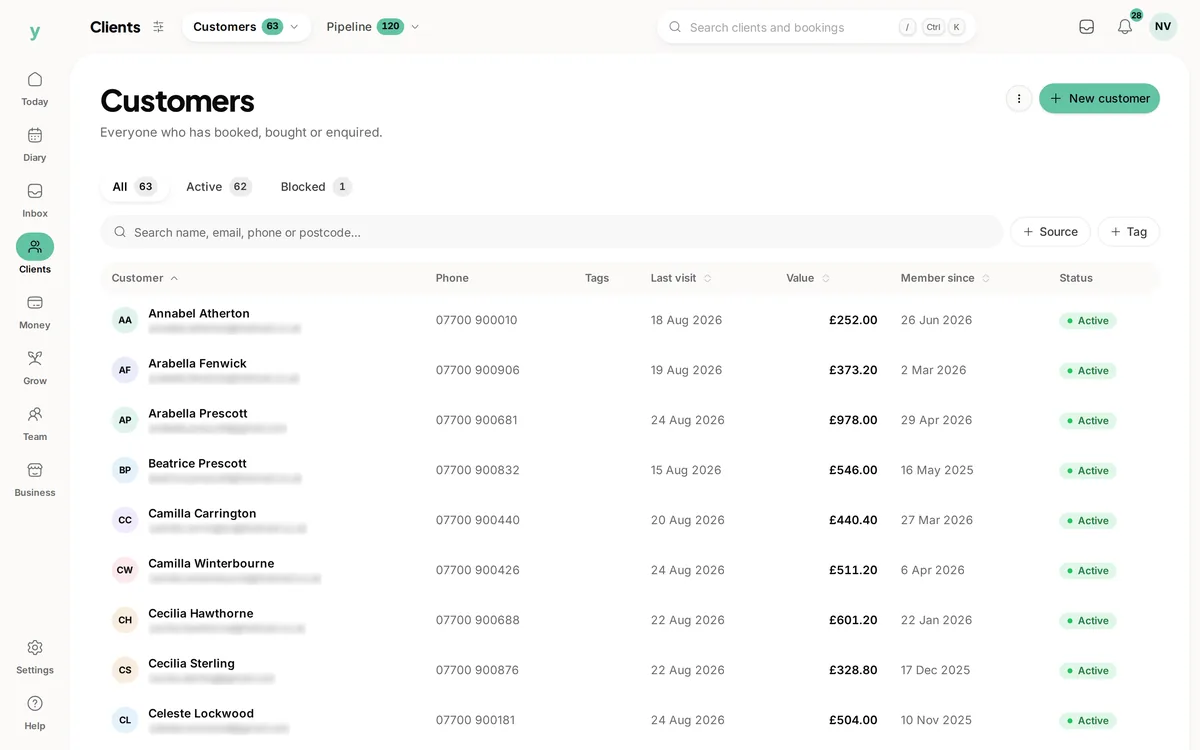
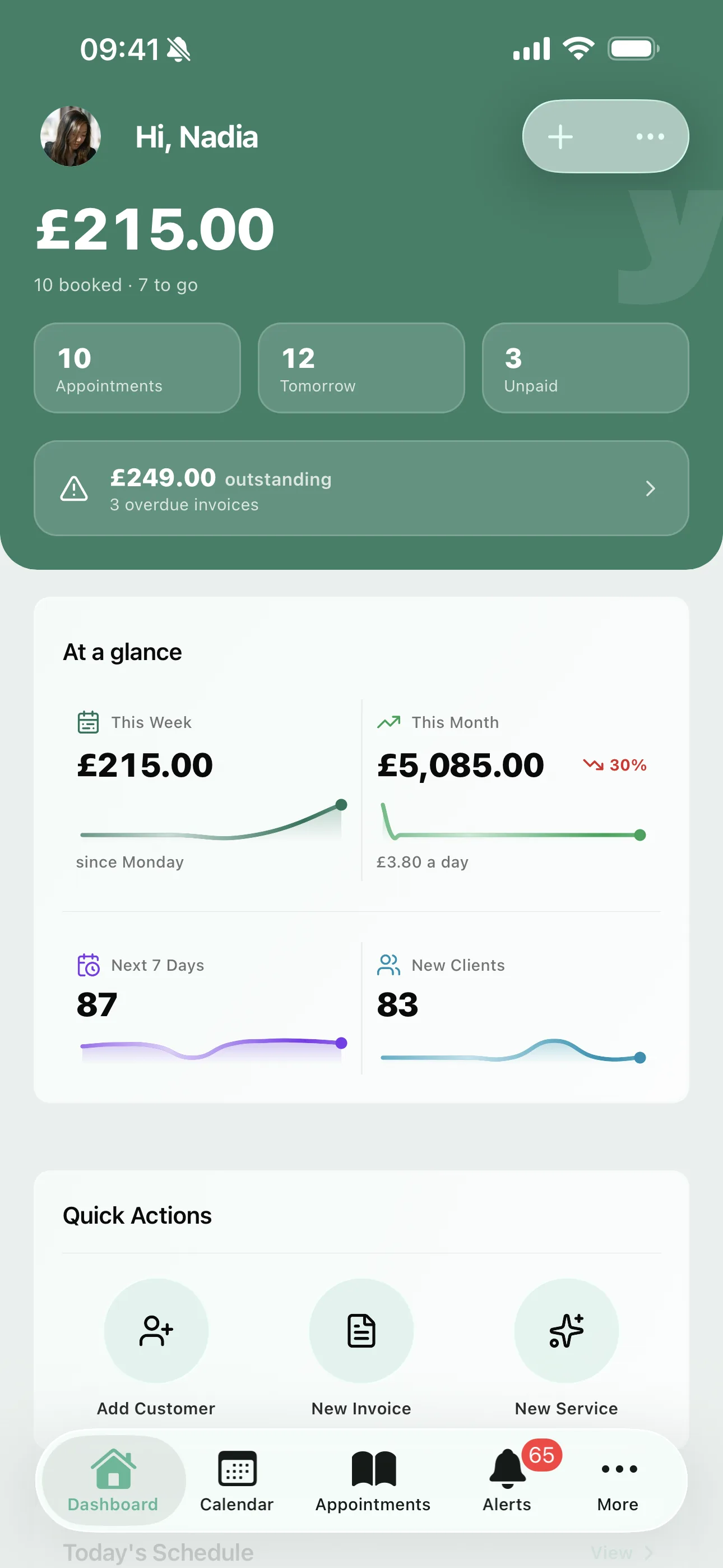
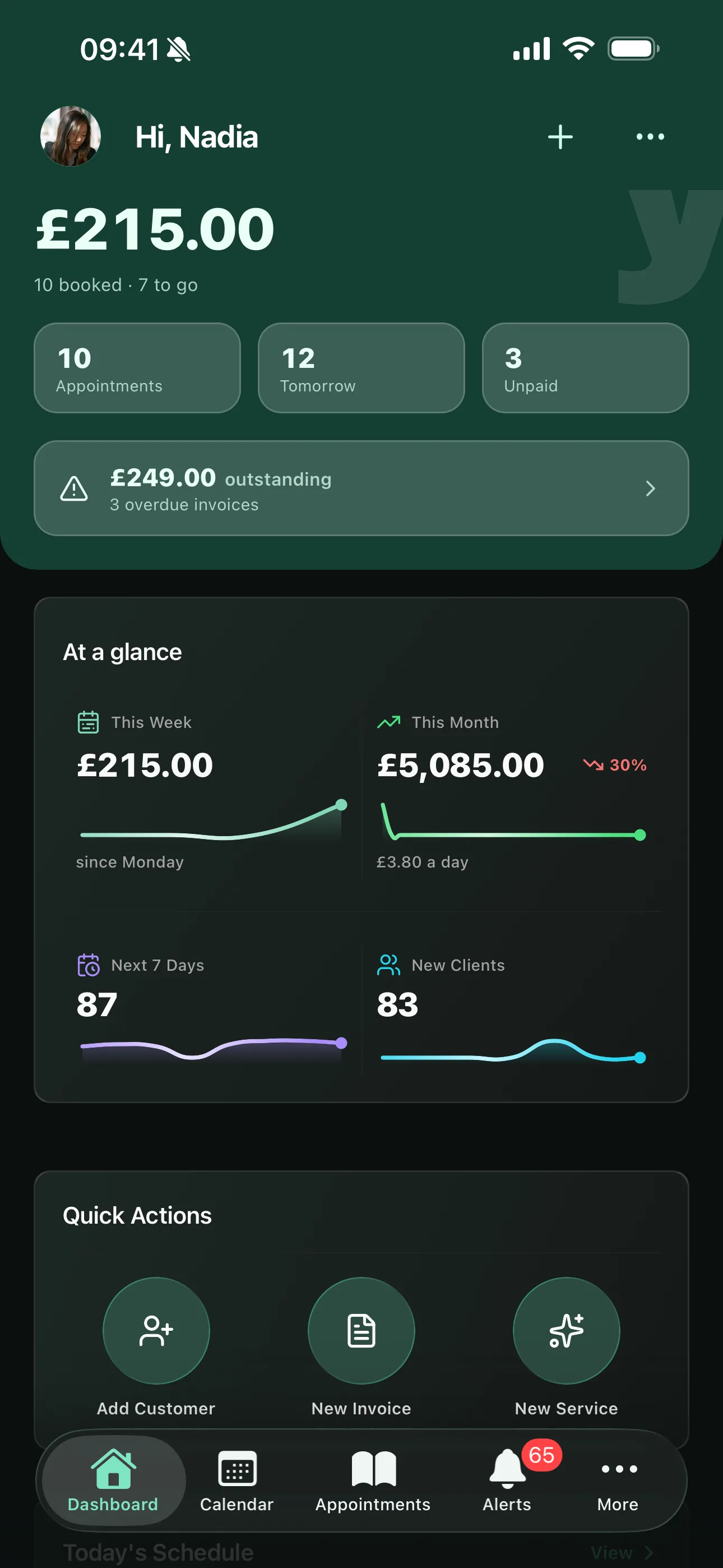
Tutoring is booked weekly and paid weekly, which means an invoice a week per pupil and an awkward conversation whenever a family drifts behind. Book the weekly slot as a series and charge a saved card before each session or collect a monthly fee.
Weekly slots charged to a saved card.
2.5% plus 35p on standard UK cards, with the platform fee inside it.
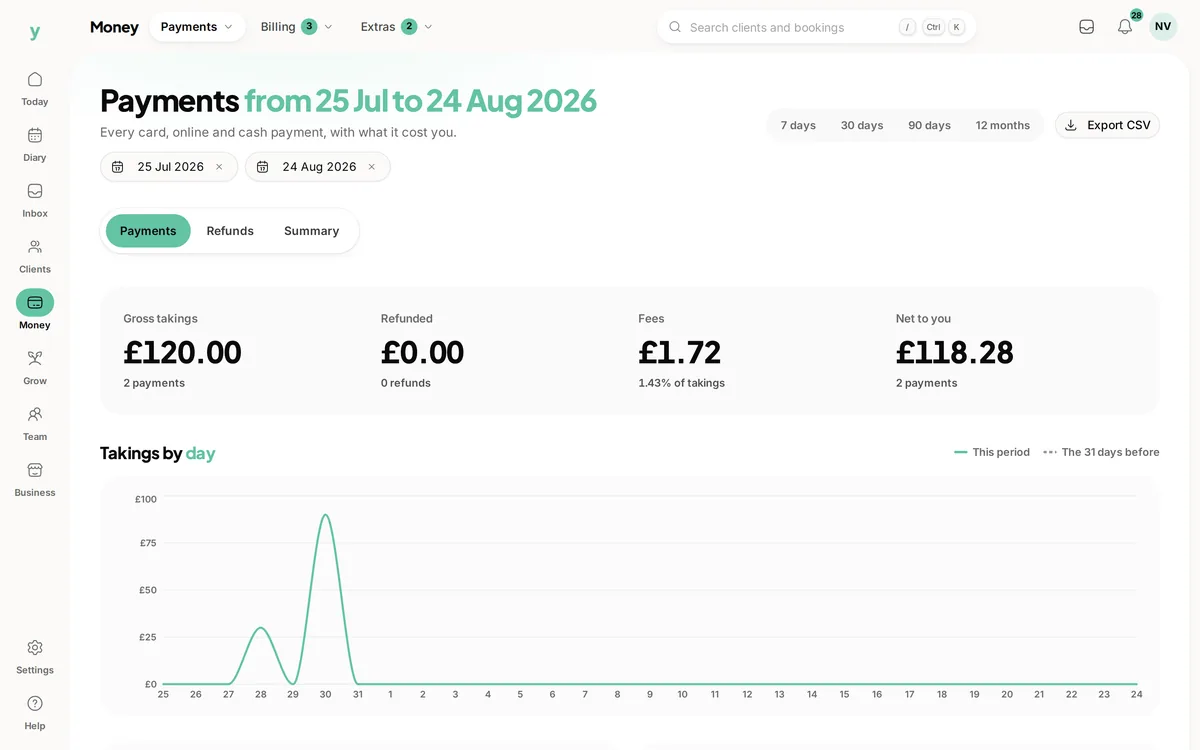
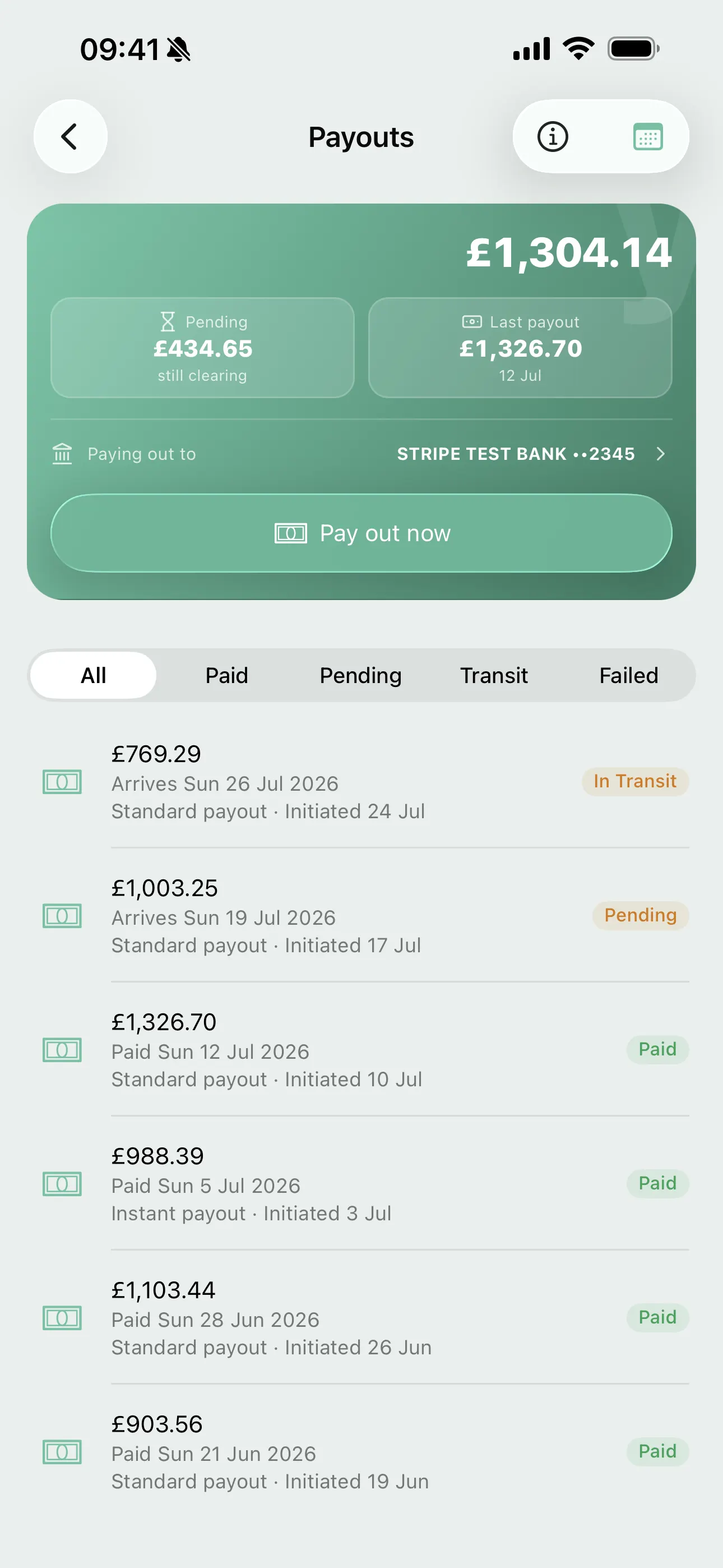
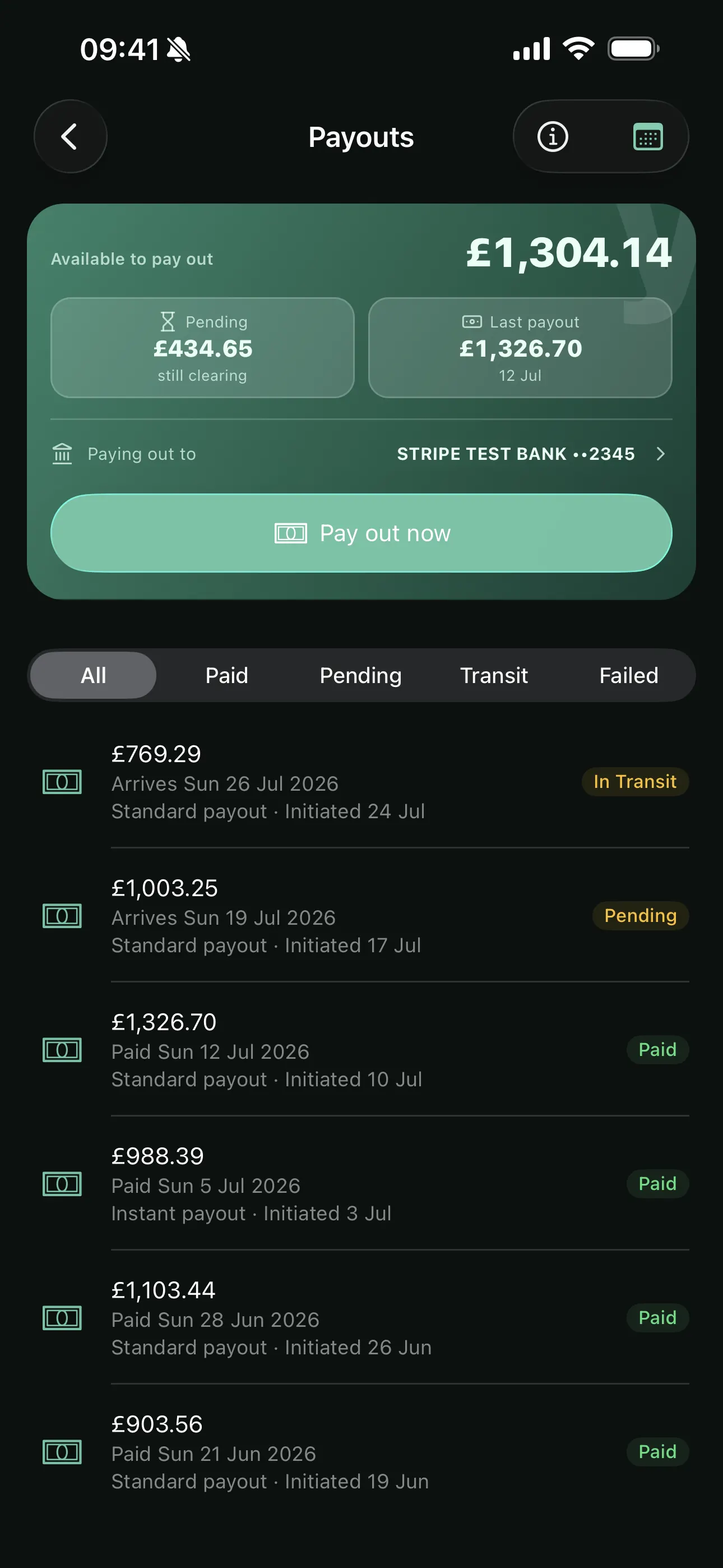
A tutor who keeps a pupil from year nine to A level is a multi-year relationship. It survives on parents seeing progress. Keep topics covered and results in notes, so the termly update writes itself.
Unlimited pupil and parent records.
Unlimited customer records on every plan, yours to export at any time.
Tutoring is the only trade here with a hard deadline written into its demand. A GCSE paper sits in the middle of June, everything a tutor sells is bought in relation to that date. It is why the diary is impossible in March and empty by the end of July.
The child sits in the chair. The parent makes the bank transfer. The two of them want different things from the hour. One would like it to be over. The other would like evidence that it is working.
That evidence has to be deliberate, because a parent cannot see a lesson. What they see is a mock grade in November and another one in March. A tutor who reports the gap between them keeps the booking through a bad half term.
It sets your rate as well. A tutor who can show a pupil moving from a four to a six is no longer selling hours and price stops being the first question a new family asks.
| Part of the year | What the phone brings | What should be selling |
|---|---|---|
| September and October | Families settling into a new set or a new school | Long standing weekly slots at the full rate |
| November to February | Alarm once the first mock results reach the kitchen table | Intensive blocks and often a second subject |
| March to May | Everybody at once and more demand than you have hours | A waiting list and the last slots priced accordingly |
| June | The exams themselves, the diary emptying week by week | September, booked before anybody breaks up |
| July and August | Almost nothing, then results day right at the end | Catch up work for the year below and for retake pupils |
The summer is not a quiet spell to be endured. It is the thirteen weeks that decide whether September starts full or starts from nothing.
It is the strange arithmetic of the trade. The better you are, the sooner the pupil passes the exam and stops needing you, so a full practice in May can be a half empty one in September without a single thing having gone wrong.
The pipeline that survives it is siblings, the year below and the parents at the school gate. All three come from families you already teach and all three arrive by being asked.
Keep leavers on the record instead of deleting them. A pupil who finished GCSE maths in June is an A level enquiry in eighteen months. Their younger brother is a booking next autumn.
Each of these sits in the same account, so a booking, its payment and the client record stay together.
Parents book sessions from your page, by subject and length.
The same hour every week through term, set up once.
For a repeating session, the saved card is charged before each one, so there is no end of term invoice to chase.
One off sessions and exam cramming are paid at booking.
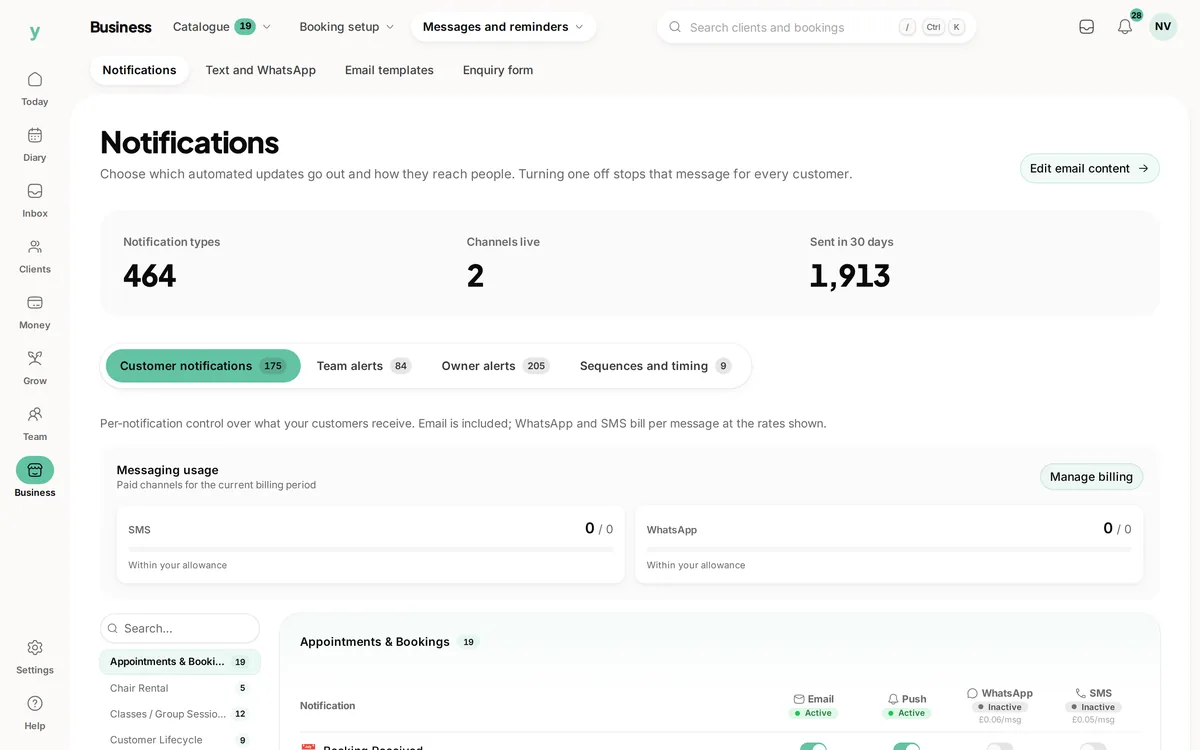
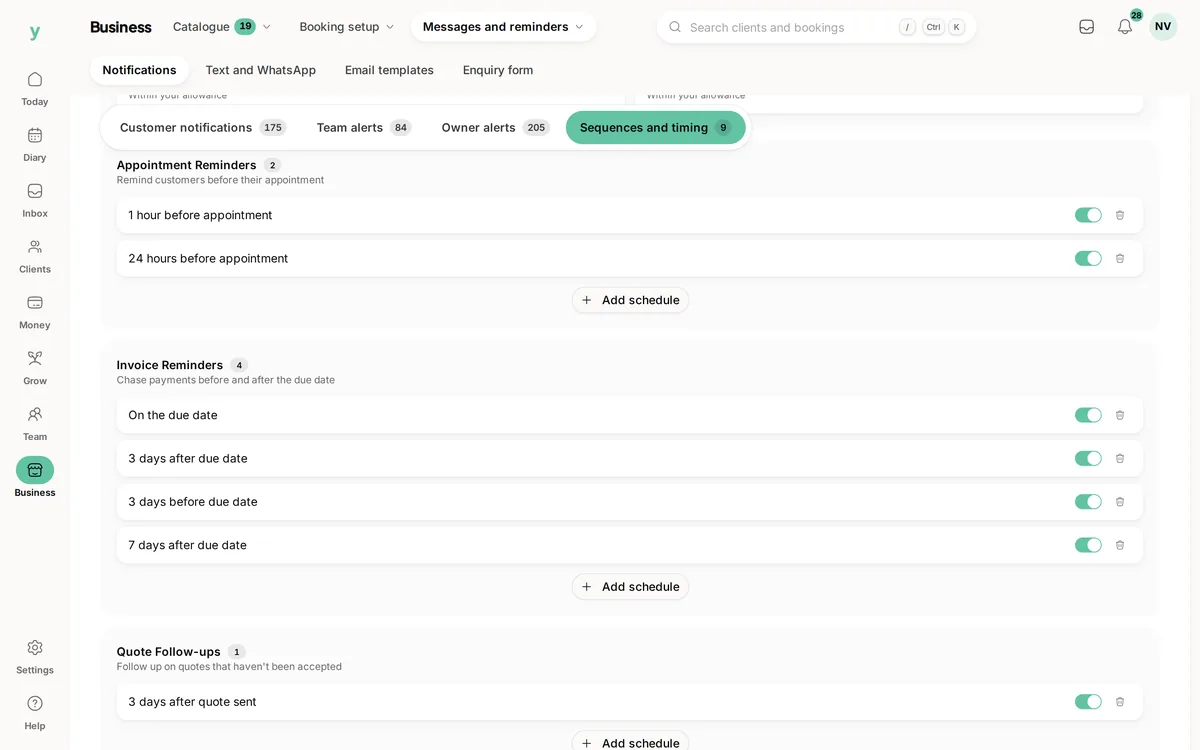
A reminder to the family before each session, by email, SMS or WhatsApp.
The parent holds the record, with the student's year, exam board and progress in notes.
The details that usually slow down a move: setup, pricing, bookings, records and how Youzse fits into your day.
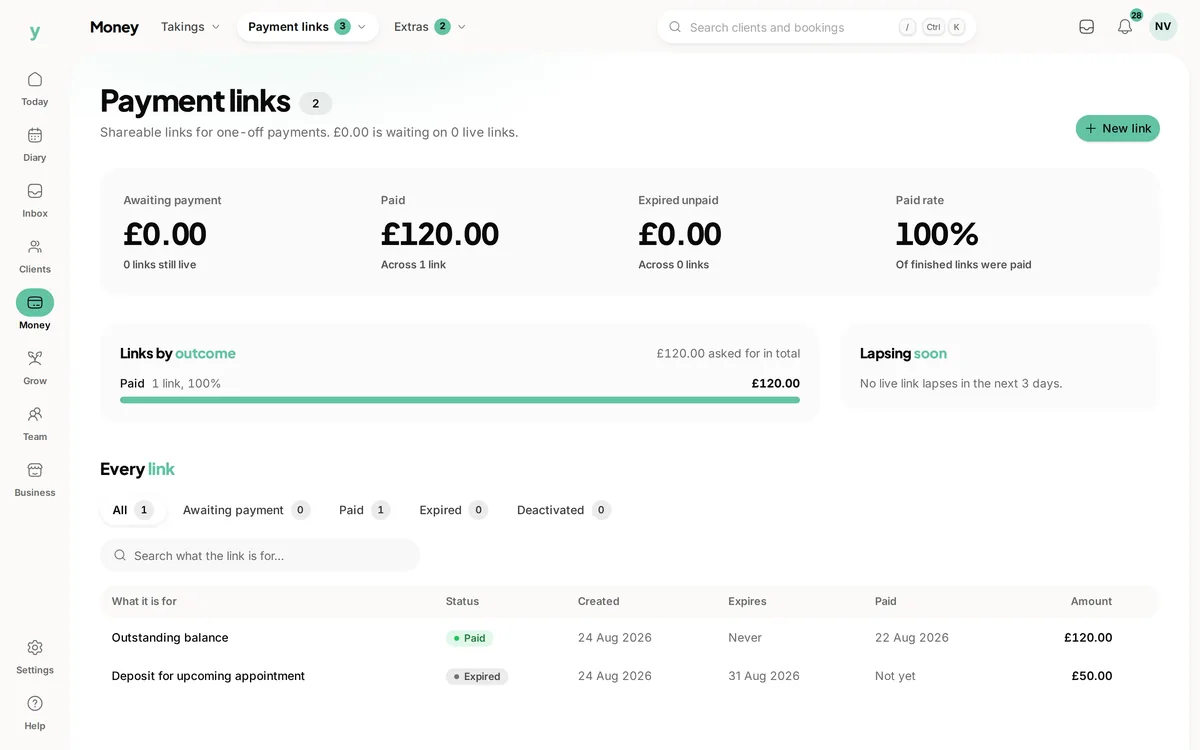
Yes. Single lessons are paid at booking. A weekly slot charges a saved card before each lesson. To take a whole term at once, send a payment link for it.
Try every feature on your plan free for 30 days, with no card needed.
We value your privacy
Cookies keep Youzse running, improve the platform and help deliver relevant content. Read our privacy policy and cookie policy.