
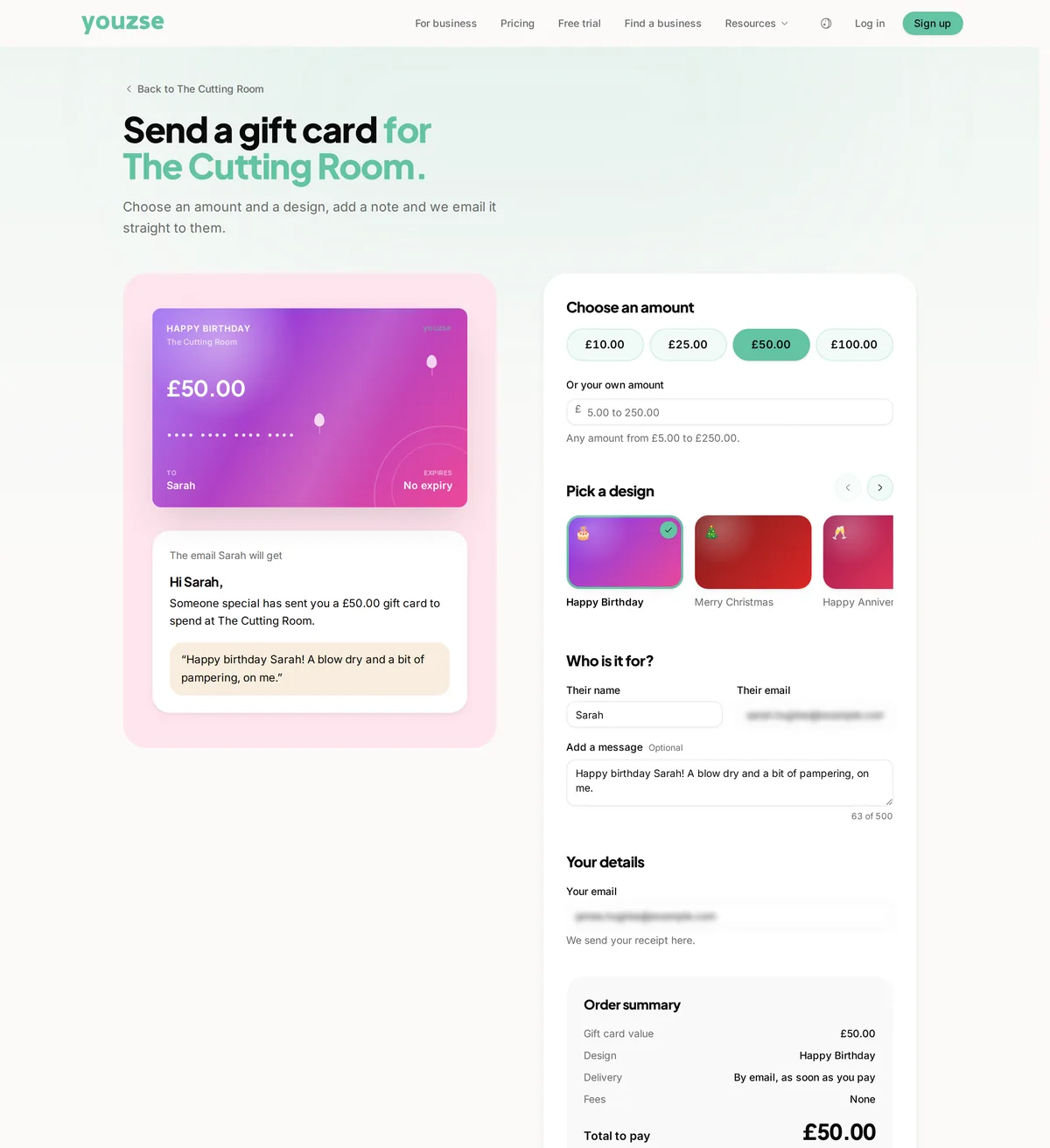
The page a buyer uses
An amount, a design and a message, with the email preview beside the form.
A gift somebody can buy after you have closed, with the balance kept against the card so nobody has to remember what was spent last time.
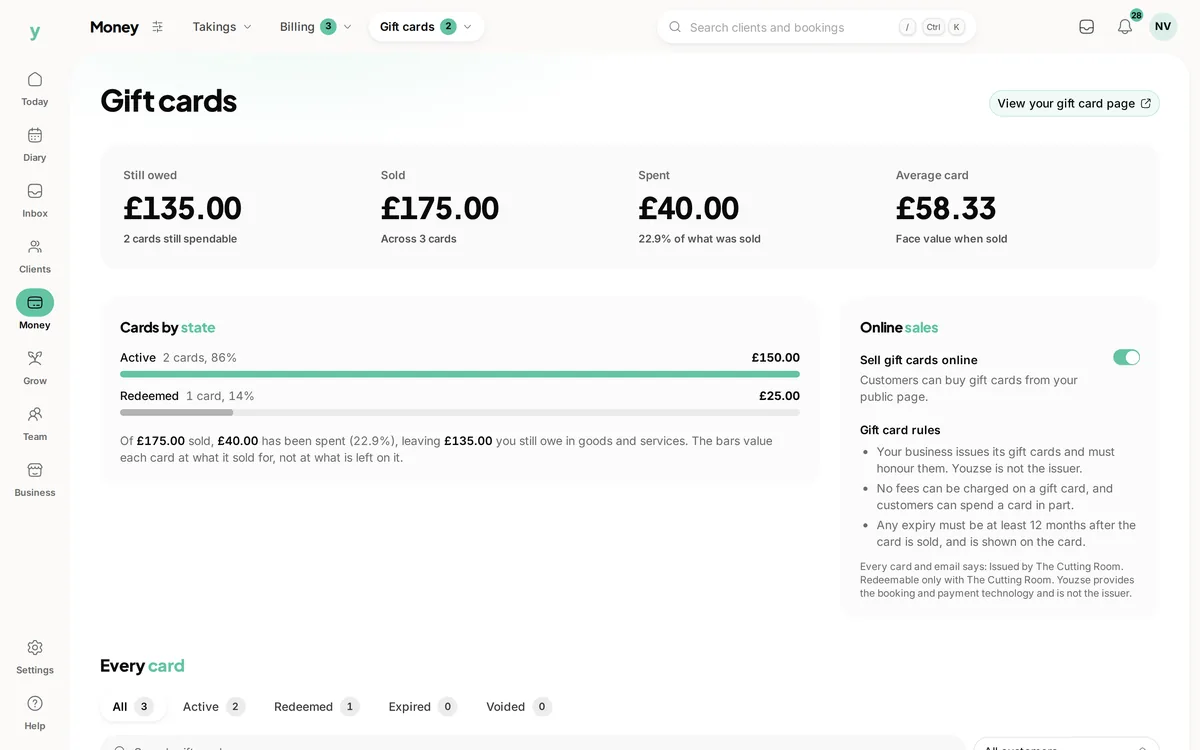
Real screens from The Cutting Room, our demo salon, with the numbers it shows today.
An amount, a design and a message, with the email preview beside the form.
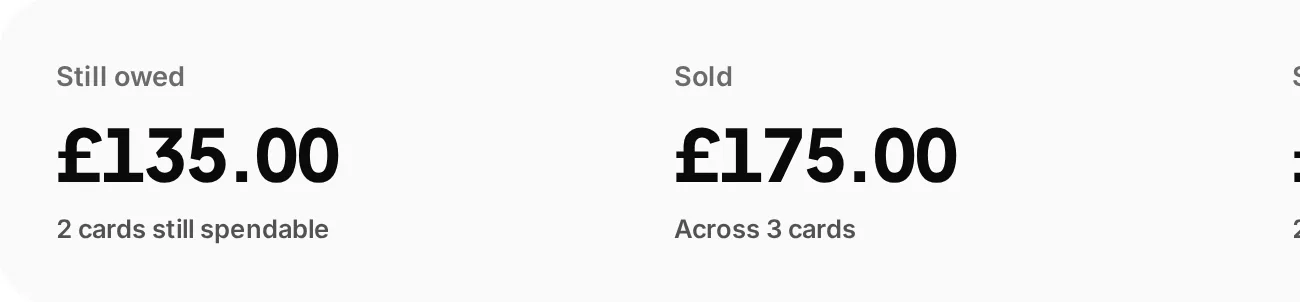
Outstanding value beside total sales, so money received is not confused with credit already spent.
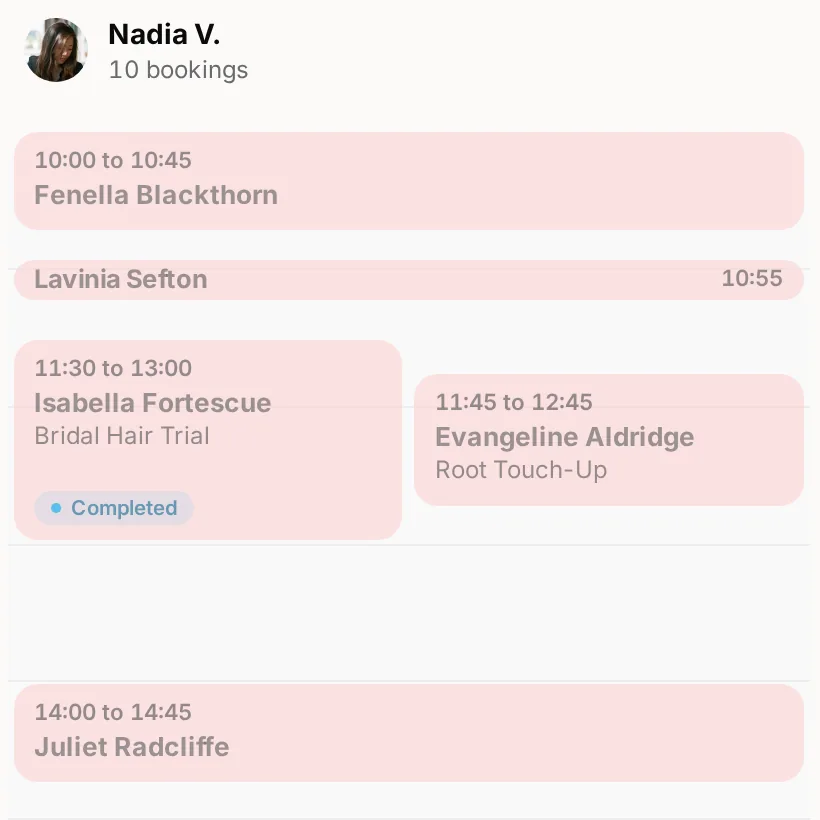
The recipient still books a service and an available time. A voucher buys value, not a place in the diary.
It is half past nine, somebody has remembered a birthday and your salon closed four hours ago. They do not need a conversation about treatments. They need a gift they can pay for now and send to the right person. Youzse lets a business sell digital gift cards from its public page, deliver them by email and keep the balance as they are used. The useful part comes after the sale: when the recipient spends some today, comes back for the rest and is served by somebody who was not there the first time.
Gift cards have their own purchase page for your business. Switch gift card sales on and have payments ready before sharing it. A buyer chooses an amount, a design and the recipient details, adds a personal message if they want one and pays online. The gift belongs to the business named on the page. It is not a voucher that somebody can take to any business using Youzse.
That gives you a useful link for the website, a social profile or the message you send when somebody asks whether you sell vouchers. The buyer does not need you to be at reception with a card terminal. Online sales still depend on your payment account being active and on gift cards being available for the business and its location; switching a setting on is not the whole setup.
The public purchase form accepts amounts from 5 to 250 in the business currency, subject to the applicable gift card limits. For a British business that is £5 to £250. These are money vouchers rather than a promise to deliver a particular treatment at its old price. If you want to sell a named service instead, make that distinction clear before taking payment.
A gift has two people in it. The buyer needs confirmation that the purchase worked. The recipient needs the gift itself, with its personal message and a way to claim it. Youzse sends the buyer a confirmation and sends the recipient a delivery email with a claim link. Your business also receives a purchase notification.
Check the recipient address carefully. A successful card payment does not prove that an email address was typed correctly or that the message reached an inbox. Before promoting gift cards, make one small purchase through the public page and check the buyer confirmation and recipient email separately. Read them on a phone, which is where a last minute gift is likely to be bought.
The recipient email is part of the purchase flow, rather than a voucher you have to make in a design tool and attach by hand. There is a choice of designs and a personal message, but this page is describing digital delivery. Do not plan a printed card fulfilment service around it.
| What happens | Card balance | What to check |
|---|---|---|
| The buyer pays £75 | £75 | The card exists and the delivery details are correct. |
| The recipient uses £45 | £30 | The redemption is recorded against the relevant appointment or invoice. |
| They return and use £20 | £10 | The next person serving them sees the remaining balance. |
| They use the final £10 | £0 | The card is spent; the earlier redemptions remain in its history. |
An illustrative British gift card, before any payment processing costs. A card balance records value available to spend, not a reservation in the diary.
Youzse supports partial redemption. The card has an original value and a remaining balance, and each use records the amount before and after it. Staff do not have to cross out a figure on a paper voucher or leave a note that only the person who wrote it understands.
A redemption can be linked to an appointment or an invoice. That connection matters when a customer asks what happened to the other £30: there is a transaction to follow, rather than a balance with no explanation. The system checks the card and the available amount before spending it, and a used balance cannot simply be spent again by a second member of staff.
A gift card is a way of paying, not a booking. Buying £75 of credit does not reserve a Saturday appointment or a particular person. The recipient still needs to choose a service and find availability. Keep that distinction in the wording around busy periods, when somebody may assume a gift guarantees the date they have in mind.
Selling a gift card brings money in before the service is delivered. The practical question a few weeks later is how much of that value customers can still come back and spend. Youzse shows outstanding gift card value alongside the cards sold, so the total is visible without adding individual balances in a spreadsheet.
The gift card screen also lets you review the cards themselves and their status. A business that sells a lot in December can use that view to prepare for redemptions, rather than treating every pound received as though the appointment has already happened. Two cards with £40 and £25 left mean £65 of remaining customer credit, even if the original sales were much larger.
This is an operational view of what is left on the cards. It does not decide how your accounts should recognise sales or replace a reconciliation with the payments you received. Keep card balances, payment receipts and completed work as separate questions when reviewing the month.
Youzse applies gift card rules for the business locations, including restrictions on expiry and sale amounts. The page should not promise one expiry period to every business everywhere. Check the policy that applies to your setup, make any expiry clear to the buyer and recipient, and test the date before putting it in a promotion.
The card service can restore redeemed value to a card and records that movement in its history. Restoring a card balance and sending money back to a bank card are different operations. Staff dealing with a cancelled appointment should check which payment was used and what has actually been returned, rather than assuming a balance change proves a bank refund.
Cards can also be voided with a reason. That is useful administration, but it deserves the same care as changing any customer balance. Agree who in the business handles corrections and check the transaction history before promising a replacement. The record is there to settle the question, not to leave two apparently valid gifts in circulation.
A gift card holds money for future spending with the issuing business. A class pass holds credits for eligible classes. A loyalty programme rewards visits or spend that have already happened. They can all encourage somebody to return, but they make different promises and should not be sold as interchangeable products.
Use a gift card when the buyer wants the recipient to choose what to book. Use a pass when you are selling a defined number of classes, and explain the class booking rules separately. None of those balances creates extra diary capacity. A clear booking link beside the gift is more useful than an ambitious promise about how easy every date will be to get.
Earned rewards and purchased gifts make different promises. Here is how the loyalty balance works.
Prepaid class credits, when you are selling sessions rather than money to spend.
Planning the work behind the money received in a busy December.
The booking diary and customer records around a salon gift card.
The limits and the detail, answered before you spend an afternoon testing for them.
Yes. With gift card sales enabled and your payment account ready, the public purchase page can take the order online. The buyer receives confirmation and the recipient receives a delivery email with a claim link.
We value your privacy
Cookies keep Youzse running, improve the platform and help deliver relevant content. Read our privacy policy and cookie policy.