
Start with the customer
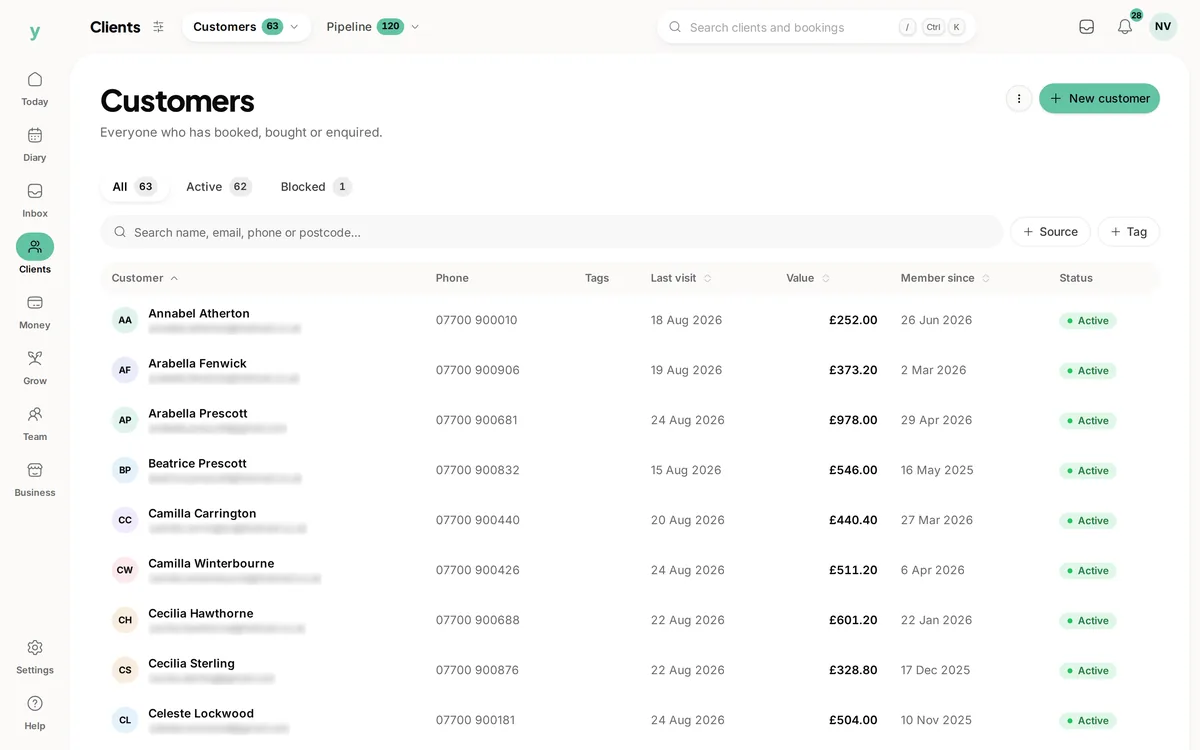
Customer records sit alongside the diary, so the team can find the person behind a reward query.
Choose how regular customers earn, set a reward you can afford and keep the balance with the customer instead of on a card they have left at home.
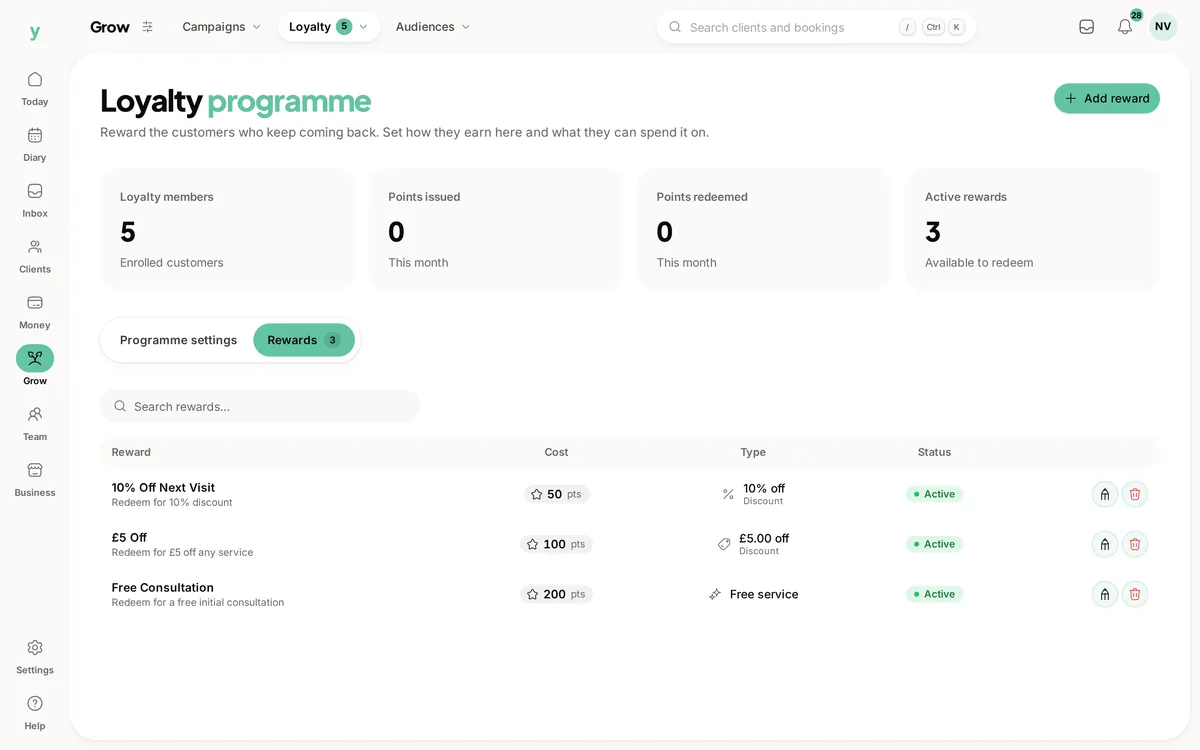
Real screens from The Cutting Room, our demo salon, with the numbers it shows today.
Customer records sit alongside the diary, so the team can find the person behind a reward query.
The catalogue says what each reward offers and the balance needed to redeem it.
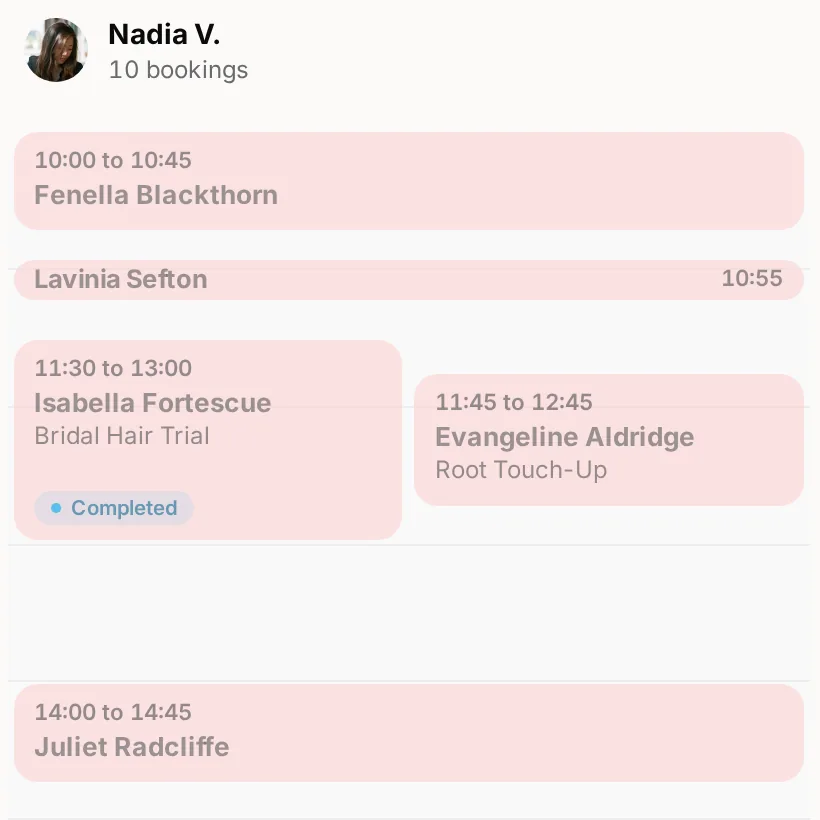
The ordinary loyalty award follows a completed appointment, rather than a booking that might be cancelled.
Your regular has been coming for years. They remember the offer differently from you, the person who usually serves them is off and the stamp card is in another coat. A loyalty programme should make that conversation shorter. Youzse keeps earned rewards against the customer record, with a choice of points, stamps or cashback and a history behind the balance. It rewards completed appointments, rather than a booking somebody may never attend. This page explains the three choices, how earning works and what to test before promising a reward to the whole client list.
A barber whose visits cost roughly the same may want a stamp per visit. A salon with cuts, colour and treatments at different prices may prefer points based on spend. Another business may want to express the reward as a money balance. Youzse has three earning modes for those choices: points, stamps and cashback.
The active programme uses one of those modes. They are alternatives, rather than three schemes automatically running together for each visit. Decide which one a member of staff can explain in a sentence, then make the reward itself equally clear. A complicated scheme is still complicated when the software does the arithmetic.
Write the promise from the customer side: what earns, how much earns, what they can use it for and whether it expires. Keep the reward modest enough that you are happy to honour it on a busy Saturday. The software can keep a balance accurate; it cannot make an unaffordable offer a good idea.
| Mode | How earning works | Illustrative British example |
|---|---|---|
| Points | Whole pounds of the appointment price multiplied by your points rate. | At 2 points per £1, a £42.50 appointment earns 84 points. |
| Stamps | The number of stamps you set for each completed appointment. | At 1 stamp per visit, a £20 appointment and a £45 appointment each earn 1 stamp. |
| Cashback | Your percentage of the appointment price, held as a loyalty balance. | At 5%, a £40 appointment earns £2 of loyalty credit. |
Examples of settings you could choose, not default rates or a recommended offer. Cashback is recorded in the loyalty balance; earning it does not send money to a customer bank account.
The ordinary award happens when an appointment is completed. A cancelled visit or a no-show does not earn the regular completion award. That is the difference between rewarding a regular customer and rewarding someone for filling the diary with appointments they do not keep.
Youzse records the appointment behind the award. Marking the same completion again does not give a second helping of points. This matters most when two people work reception or somebody returns to an appointment to check its details: keeping the diary tidy should not quietly double the reward.
For spend-based modes, the calculation uses the appointment price. It is not a separate calculation across every product sale, invoice line and pound that passes through the business. Test the services and payment arrangements you actually use, including discounted work, before describing the scheme as rewarding all spending.
In points mode you set how many points a whole pound earns. The whole-pound part is worth saying plainly: at two points per pound, £42.50 earns 84 points, not 85. Those small details are the ones that otherwise turn into a query at the desk when a customer has been doing their own sum.
You also create the rewards, with a name, a description and the number of units needed. The reward catalogue can describe a fixed discount, a percentage discount, a free service, a gift card or a custom reward. Make the description say what the customer gets and what the staff member needs to do to honour it.
A customer reaching a reward threshold can be notified. Reaching that threshold is not the same as booking a free service, issuing a voucher or applying every kind of discount automatically. Try the redemption process for the reward you intend to offer and make sure the balance, booking and payment all tell the same story.
Stamps mode awards the configured number of stamps for a completed appointment and has a stamps-for-reward target. It is the familiar card in the wallet, with the count kept on the customer record instead. Somebody can turn up without a paper card and still have the visits they earned.
The trade-off is that a stamp measures a visit rather than its value. If a short tidy-up and a long treatment each earn one stamp, that is the scheme doing what you asked. Decide whether that is fair to your customers and affordable for you before choosing it because it sounds simpler.
A digital stamp is not a prepaid session. A customer with five stamps has earned progress towards a reward; they have not bought five appointments. If you are selling ten classes in advance, the class package feature is the relevant one. Keep the two balances distinct when explaining them.
Cashback mode expresses the award as a percentage of the appointment price. On the British example above, five per cent of £40 is £2. Youzse stores that as 200 pence of loyalty balance. The name does not mean that a bank transfer goes out after every appointment.
That makes the explanation easy if your customers think in money rather than points, but it puts more weight on the terms you give them. Say how the credit can be used with your business. Do not call it a cash payout if what you are offering is value towards a later visit.
The modes use different units. A balance of 200 points, 200 stamps and 200 pence are three different promises. If you change the programme later, review existing balances and the customer explanation before announcing the change. Renaming a scheme is not a conversion plan for what people have already earned.
The customer loyalty view shows the balance, the mode and a history of activity, with totals for what has been earned and redeemed. That lets a member of staff answer a question from the record instead of guessing whether the last visit counted.
Authorised staff can make a positive or negative adjustment, and a reason is required. That gives you a way to deal with an opening balance or a correction while leaving an explanation for the next person who looks. Use a useful reason, such as the visit being corrected, rather than a note that says only adjustment.
Redemption checks the balance before deducting it and records the movement. Refunds and cancelled work also deserve a look at the history: returning a payment, reversing an earned award and restoring a reward used on a booking are separate parts of the story. Test the reversal route you use, rather than promising that every manual change elsewhere automatically settles every loyalty entry.
The programme has a configurable inactivity period for points or stamps. When there has been no earning or redemption within that period, expiry processing can clear the remaining balance and record what was removed. This is different from each award disappearing a fixed number of days after the visit. Cashback does not use the same automatic expiry process, so check the selected mode before describing your expiry terms.
A welcome bonus can also be configured. It is tied to the first completed appointment, rather than merely opening an account, and is recorded separately from the ordinary visit award. If you use it, explain it as a one-off bonus so customers do not expect the same extra amount every time.
A loyalty scheme is a continuing promise to existing customers. Before changing the earning rate, reward cost or expiry, decide how you will explain the effect on people who have already joined. A clear small reward that you keep is more useful than a generous headline that needs explaining away later.
Value bought for somebody else, with partial spending and a remaining balance.
How prepaid attendance credits differ from stamps earned after a visit.
Give existing customers a clear reason and an available time to return.
Regular visits and the customer history behind a digital stamp card.
The limits and the detail, answered before you spend an afternoon testing for them.
Yes. Choose stamps as the active programme mode, set the stamps earned per completed visit and set the reward target. Points and cashback are alternative modes.
We value your privacy
Cookies keep Youzse running, improve the platform and help deliver relevant content. Read our privacy policy and cookie policy.