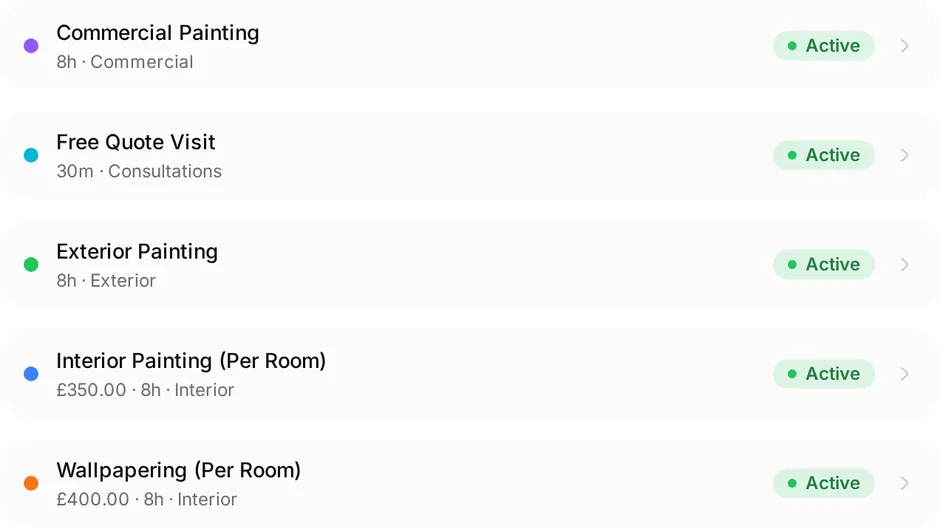
 Interior painting (per room) at £350
Your whole menu in one list
Commercial painting, free quote visit and the rest of the menu sit in one list with a length and a category, and a price where there is one.

Keep the agreed rooms, preparation and finish in the quote. Schedule the work, record accepted changes and inspect the deposit and invoice balance.
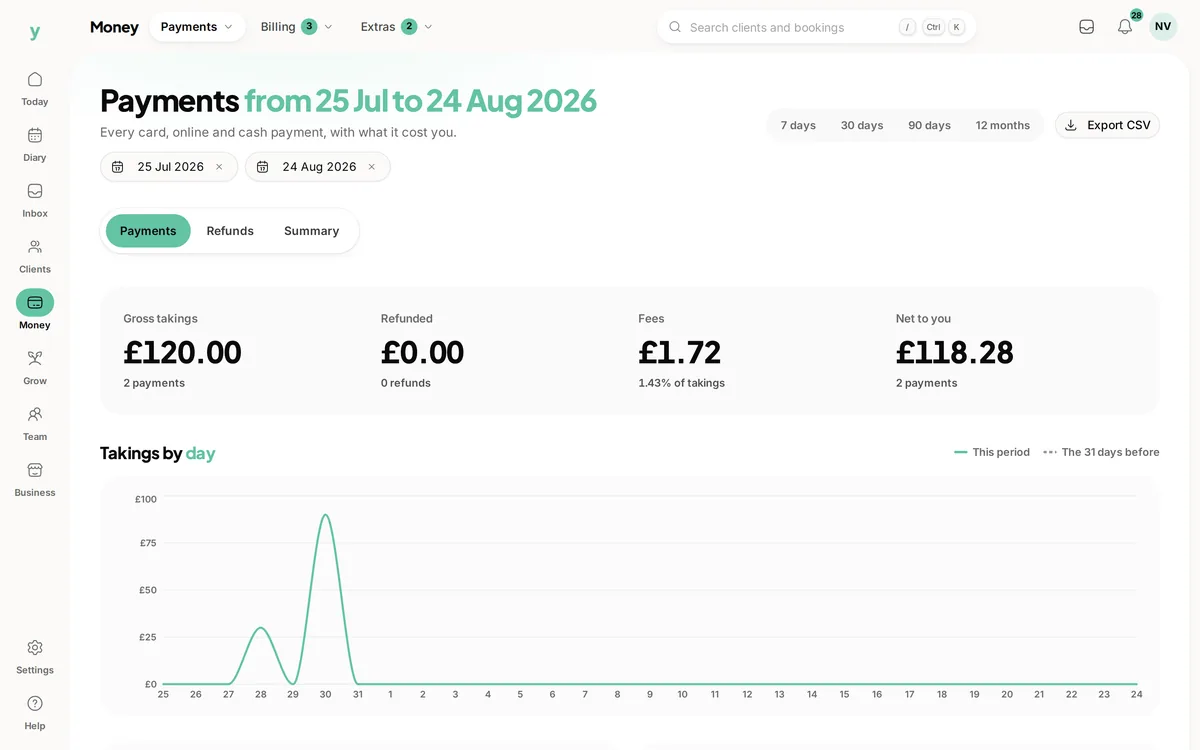
Zero commission. No cut of a payment, nothing on a new client.
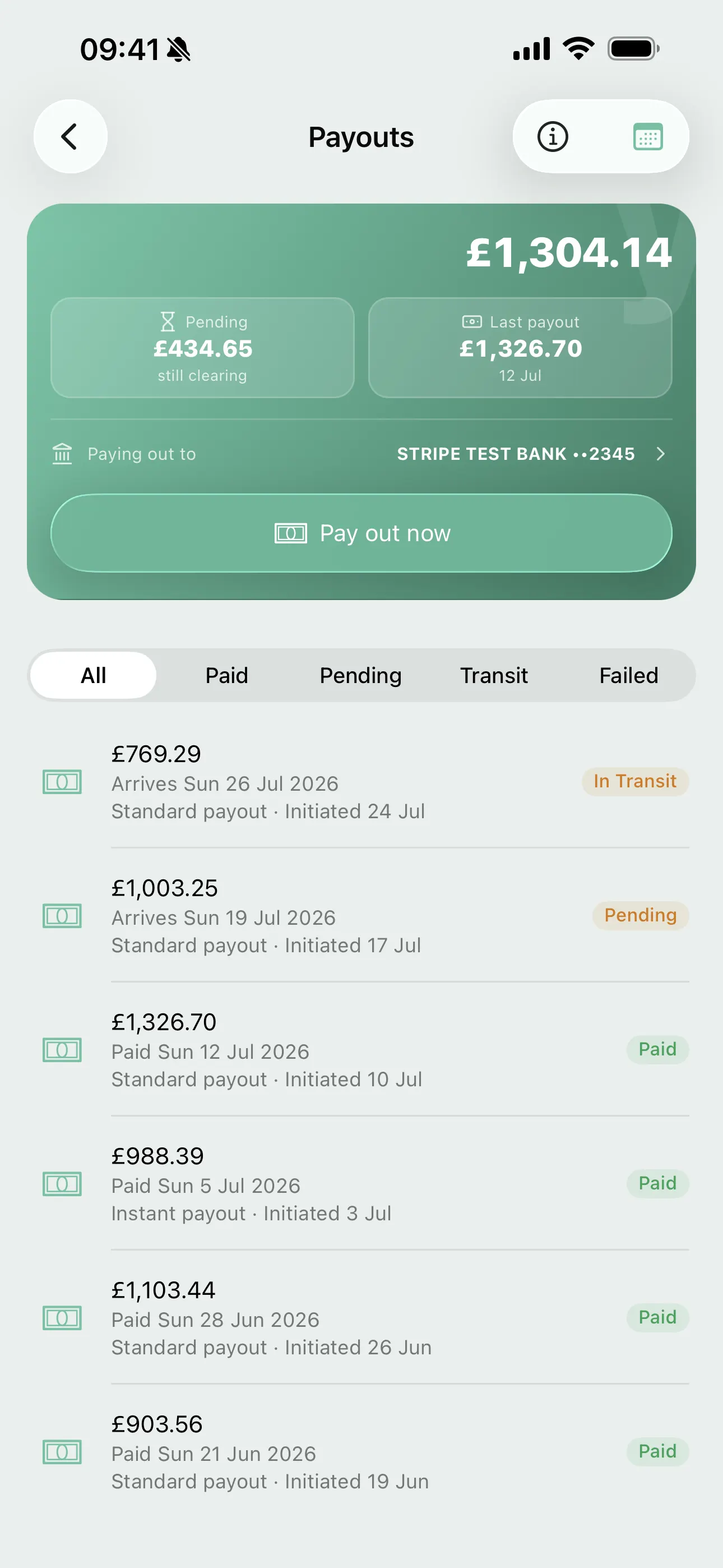
One monthly subscription, plus Stripe’s own 1.5% + 20p on standard UK cards. Youzse adds nothing to it.

Real screens from Precision Decorating, our demo decorating firm, with the numbers it shows today.
Interior painting (per room) at £350Commercial painting, free quote visit and the rest of the menu sit in one list with a length and a category, and a price where there is one.
 Waiting for your reply
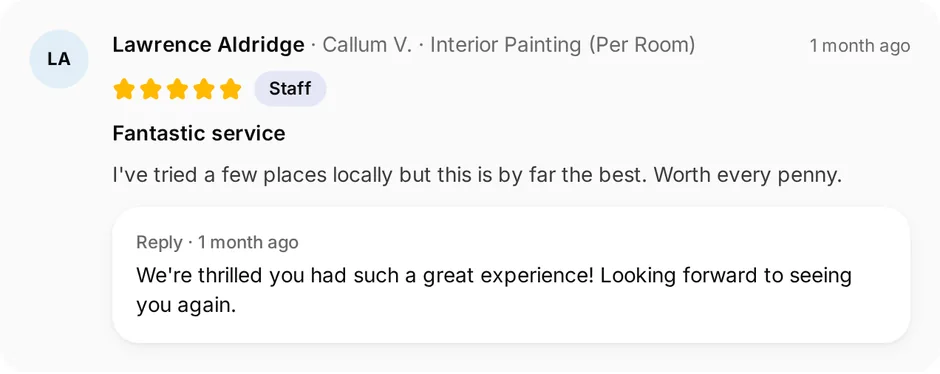
Every review names who it was with and what was booked, this one for free quote visit. Reply from the same screen.
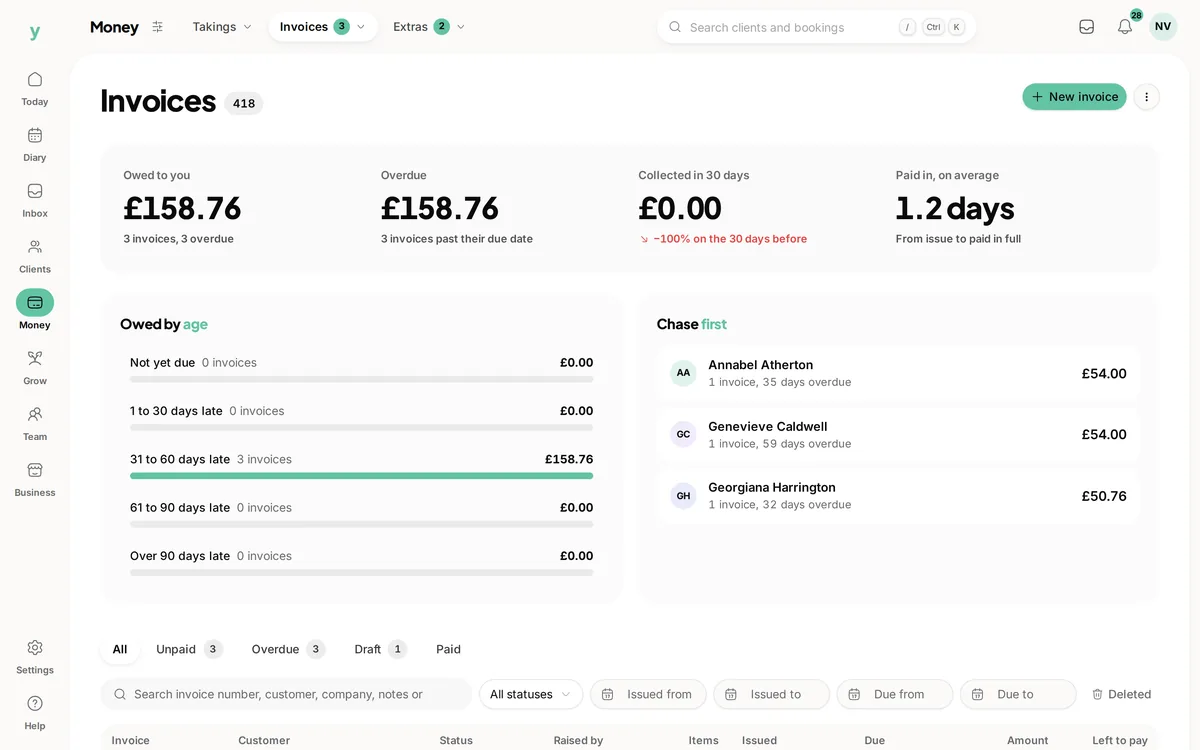
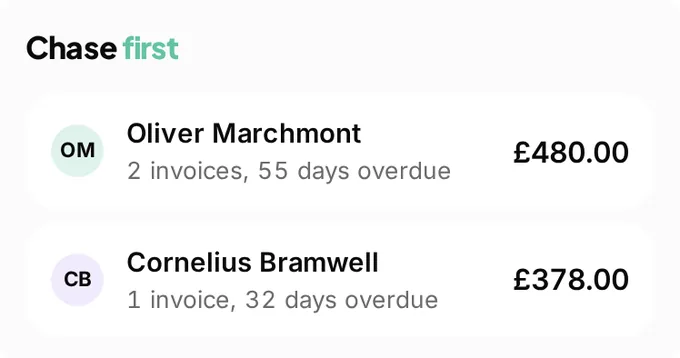 Largest balance first, £480
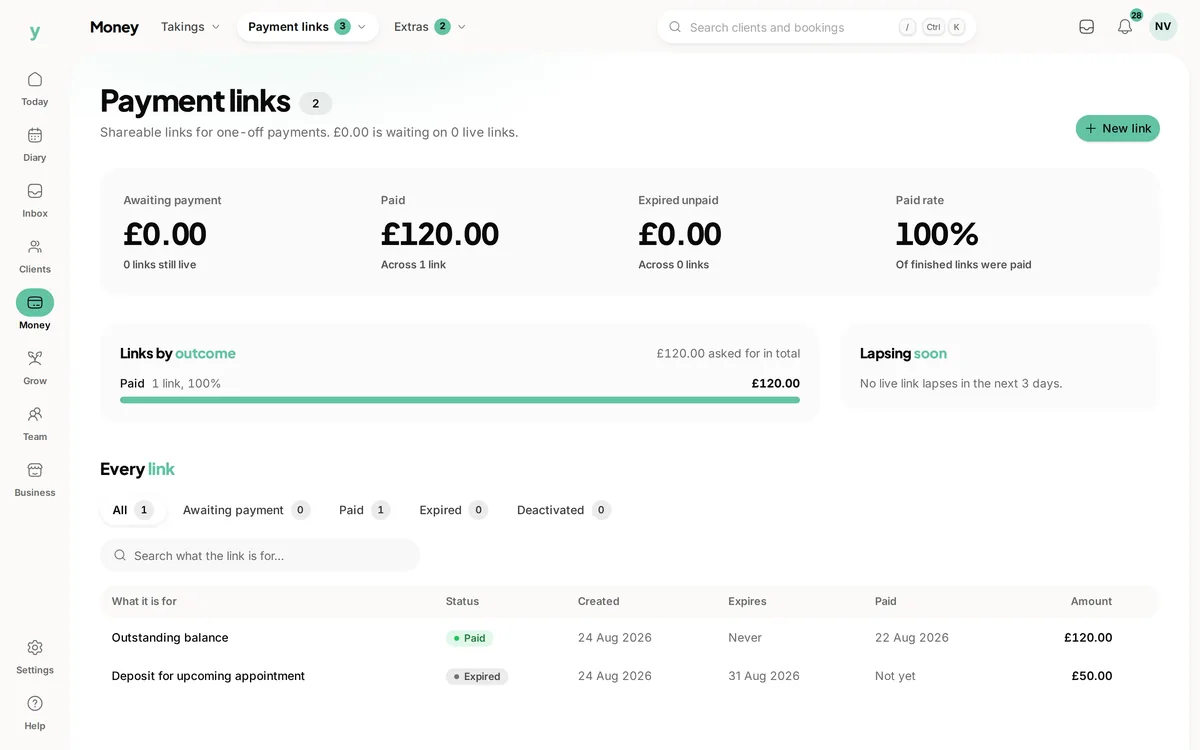
Overdue invoices line up by what is owed, £858 across 2 clients here, with how late each one is.
Capture enquiries, send a clear quote and lock in the date with a deposit. Schedule the job, keep the customer updated and invoice the balance when the last coat is dry.
No commission on anything you take. No per job charges.
One monthly subscription. 1.5% + 20p only when you take a card payment.
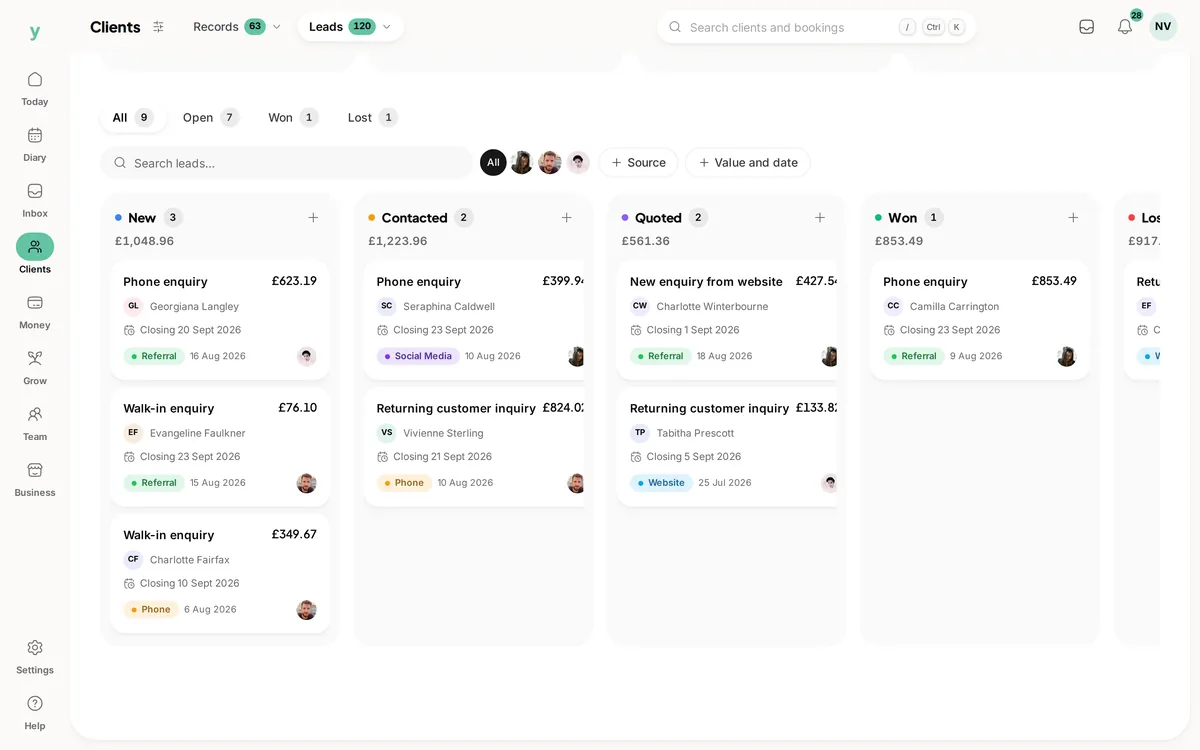
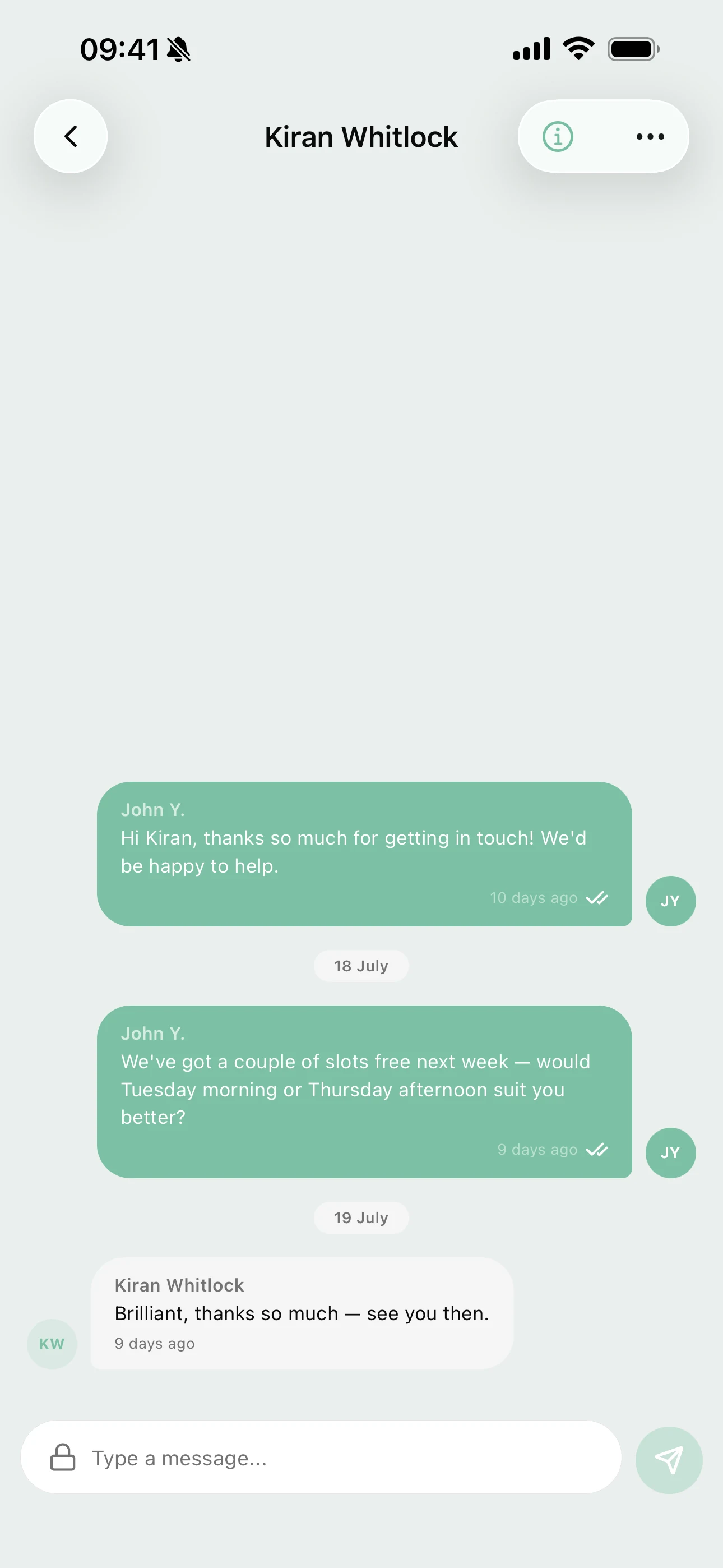
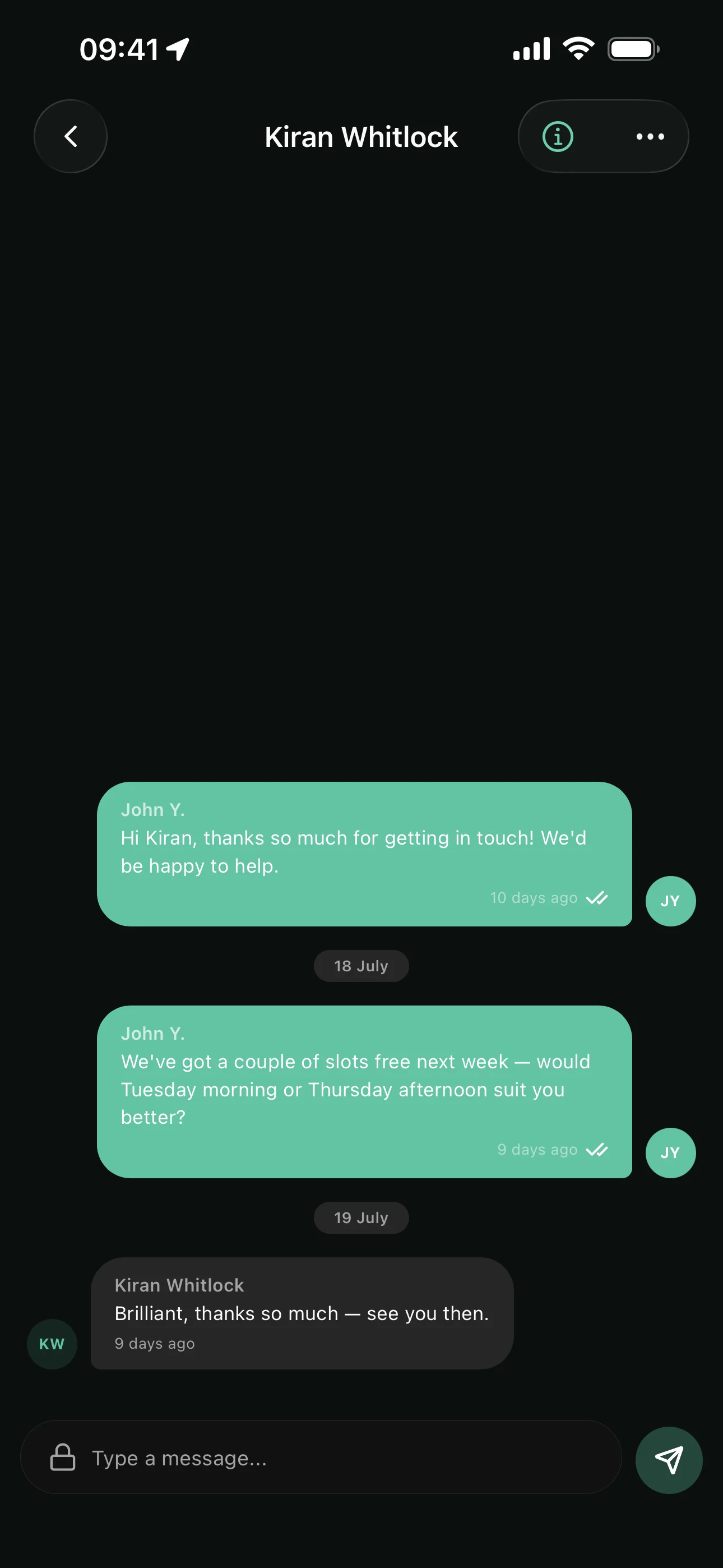
Twenty litres of a mixed colour is spent money the moment it is tinted. Take a deposit that covers materials, quote the preparation separately and invoice room by room on a long job.
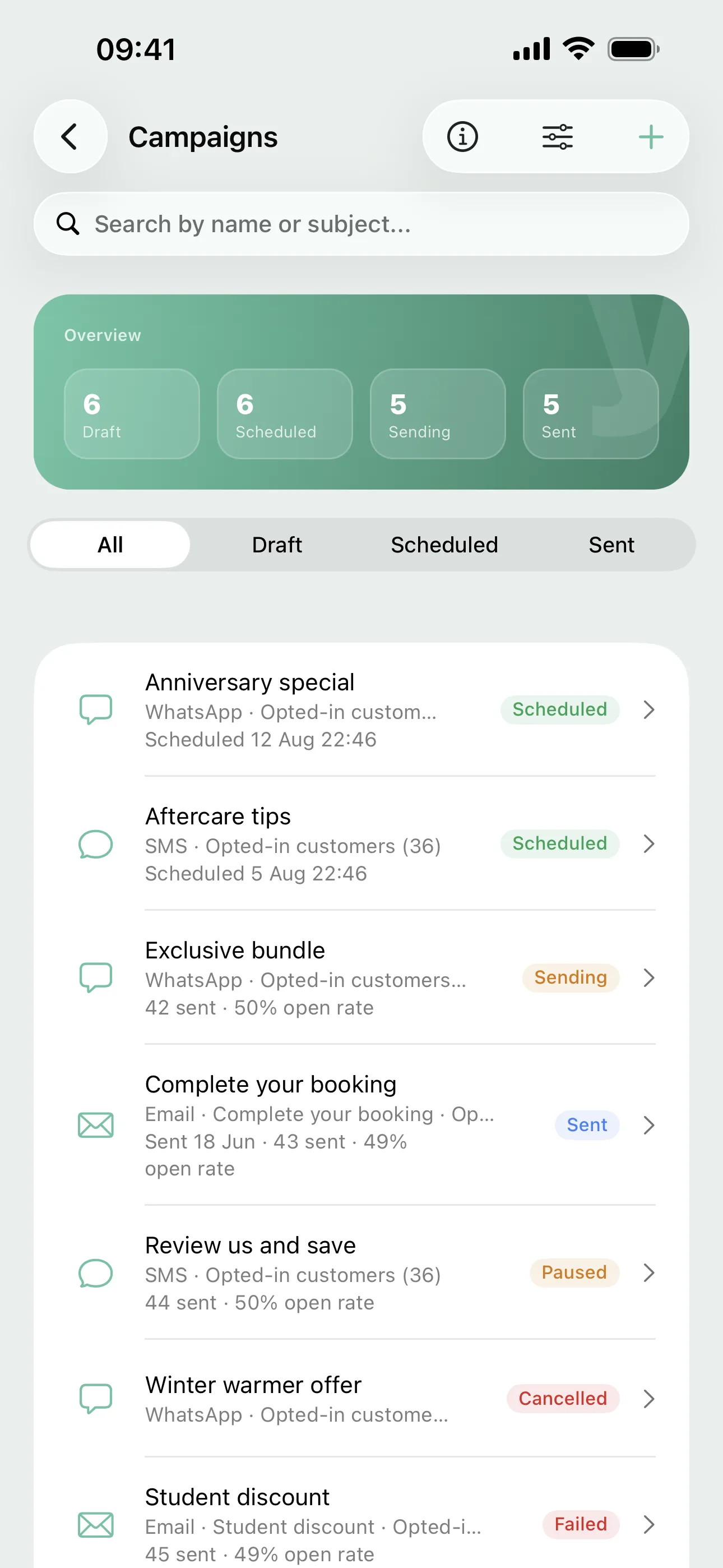
Overdue invoices chase themselves.
1.5% plus 20p on standard UK cards, and nothing added on top.
Decorating comes round again. The decorator the customer already trusts gets the call. Keep the colours and finishes you used so the touch-up in two years is an easy yes rather than a colour-matching exercise.
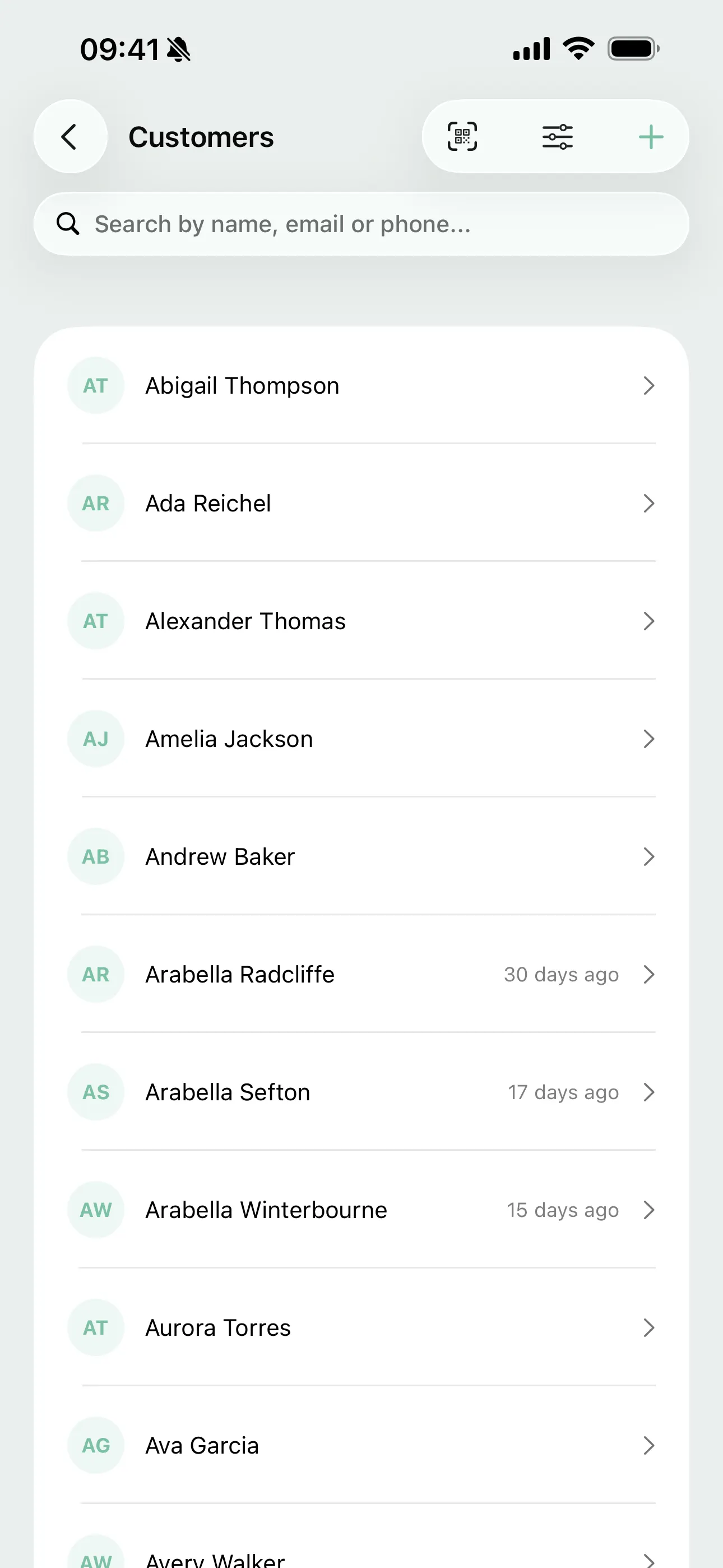
Unlimited customers on every plan.
Unlimited customer records on every plan, yours to export at any time.
Decorating is judged entirely on a finish and priced almost entirely on preparation. The customer can only see one of those two things. That mismatch is where every awkward conversation in the trade begins.
Two identical bedrooms can be a day apart. One has sound plaster and takes a mist coat and two of emulsion. The other carries forty years of vinyl paper, three filled cracks, a bad patch behind a radiator and a ceiling somebody has already had a go at with a roller.
A flat room rate flattens that difference and the bad rooms end up paid for by the good ones. Survey the surface and put the making good on the quote as a line the customer can read, because preparation that appears in writing stops being assumed to be free.
It is also the only defence when a wall turns out worse than it looked. A written allowance for making good turns extra hours into an agreed variation rather than a conversation on a Friday afternoon.
| Day | What is actually happening | What the customer sees |
|---|---|---|
| Day one | Stripping, masking, filling and sanding | Nothing has been painted |
| Day two | More filling, caulking, mist coat on new plaster | Nothing has been painted |
| Day three | Ceilings and first coats | It looks patchy and worse than before you came |
| Day four | Second coats, woodwork and cutting in | It suddenly looks finished |
Three quarters of the labour happens before anything looks any different. Saying so on the morning of day one costs a sentence and saves the whole conversation on day two.
A three week job invoiced at the end is three weeks of wages, paint and travel funded out of your own account. Nobody in this trade set out to lend money and a great many people in it are doing exactly that.
Invoice as each room completes. Customers almost never object, because the thing they are paying for is standing finished in front of them. It turns one uncomfortable request at the end into three straightforward ones along the way.
Take enough at the start to cover the paint. Twenty litres tinted to a specific colour is spent money the second the mixing machine stops. No merchant is taking it back.
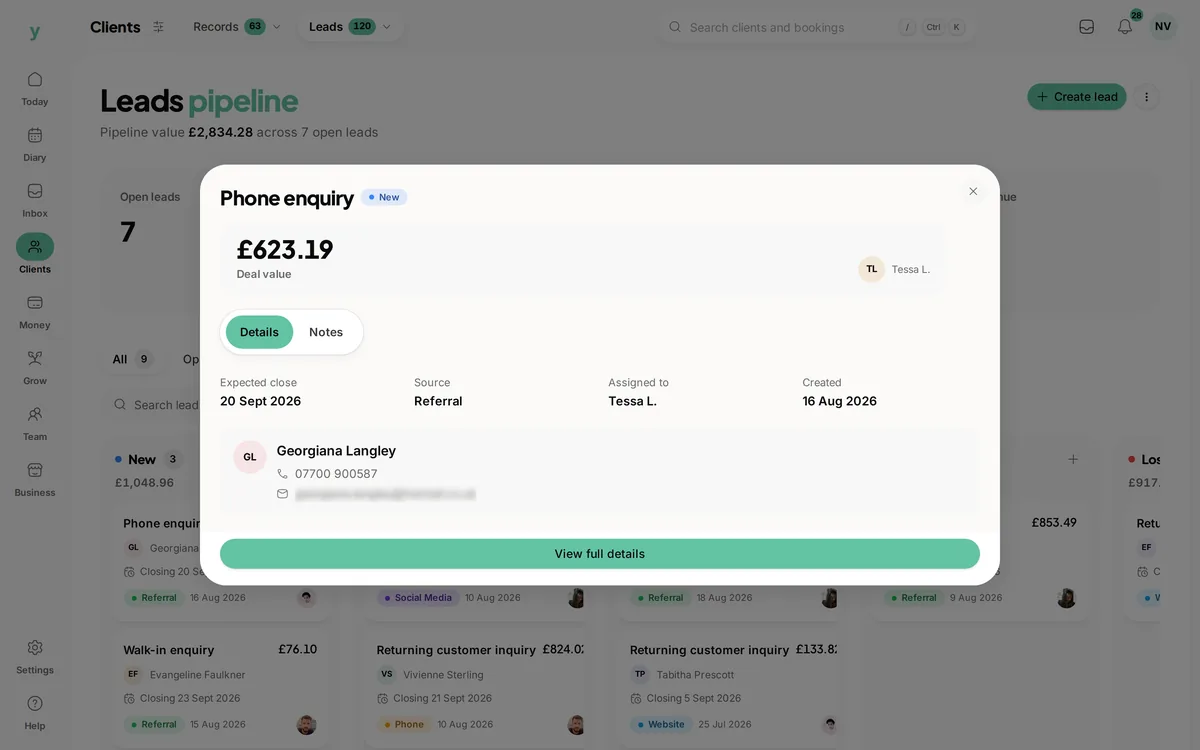
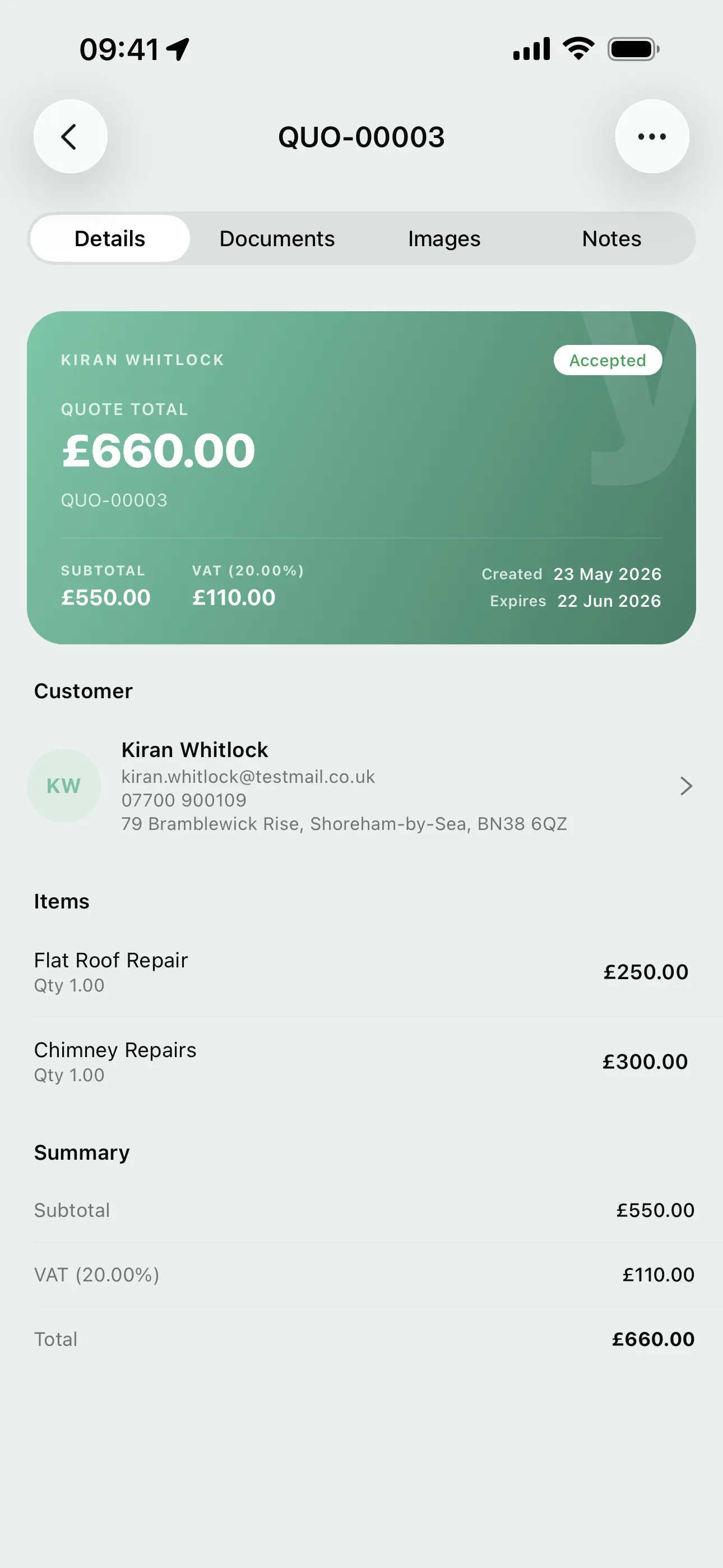
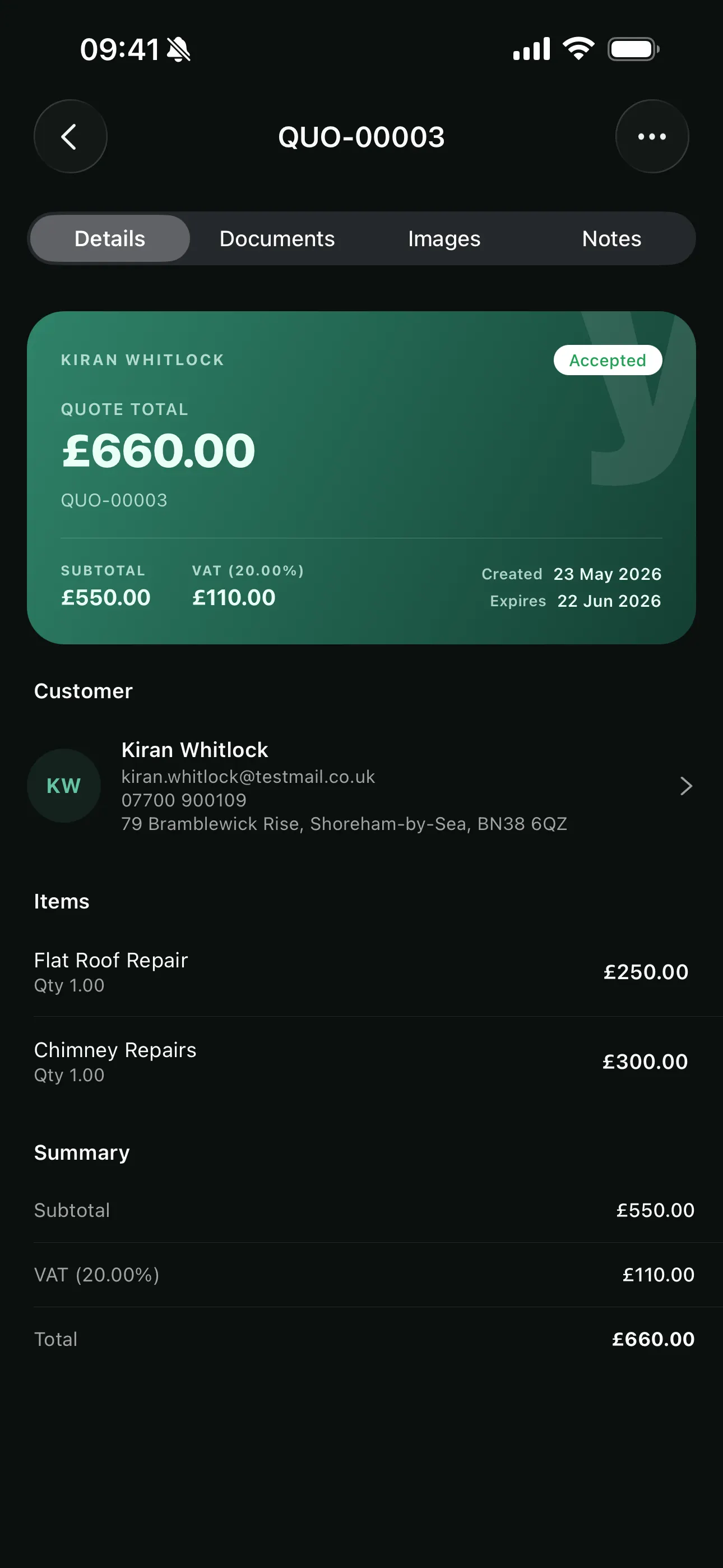
Use an enquiry for more than one room. Put the rooms, surfaces, preparation and agreed finish into the quoted scope so the customer can see what the price covers. Record who supplies materials and which tasks are excluded.
If another room or a different finish is requested later, update the agreement before adding the work to the diary. Keep access details and the current scope available to the authorised person carrying out the job.
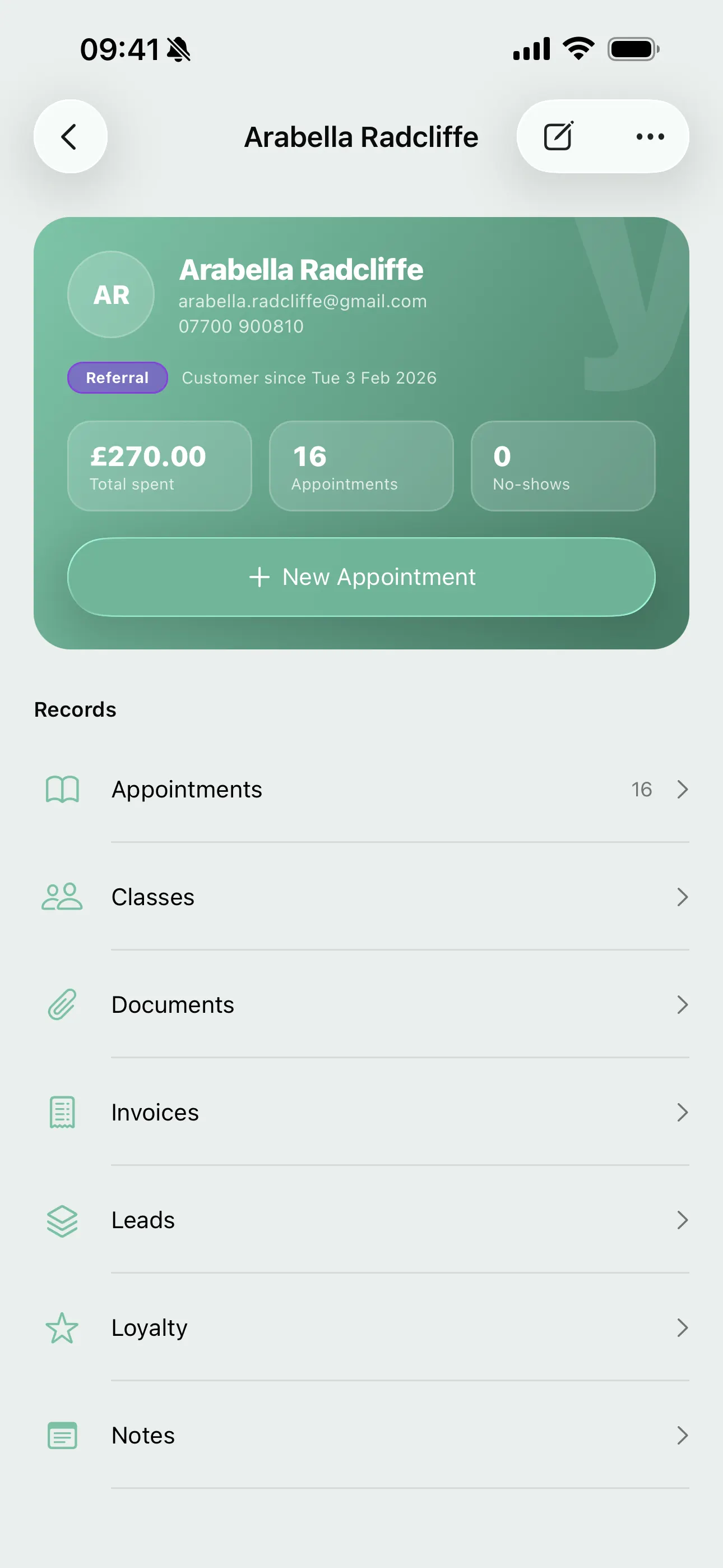
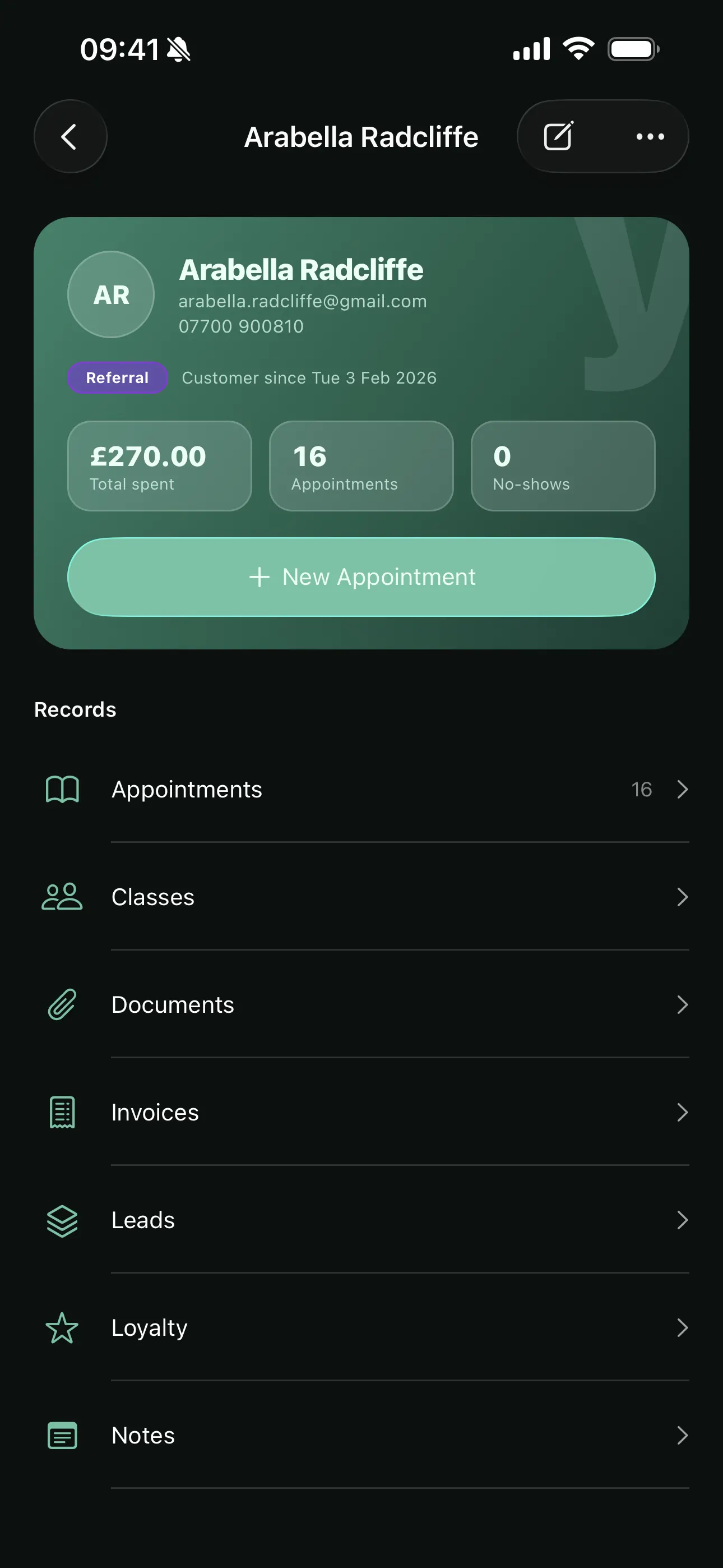
Each of these sits in the same account, so a booking, its payment and the client record stay together.
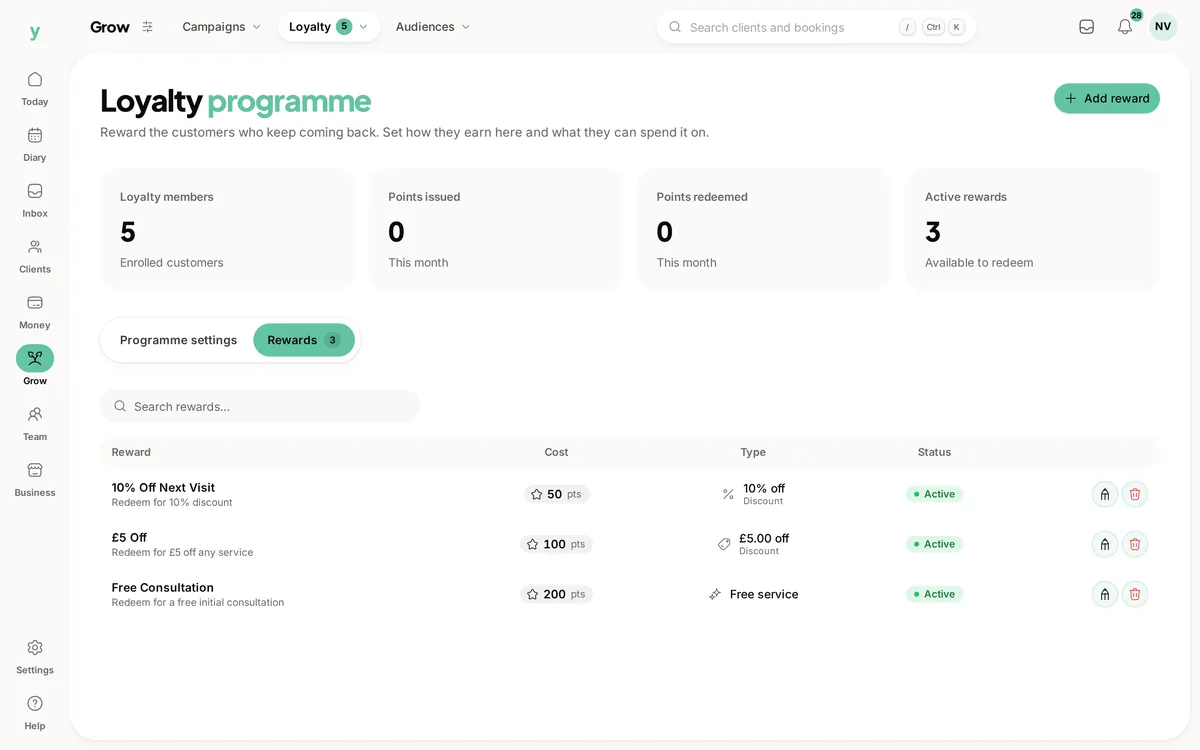
Customers send room details and photos through your enquiry form, all in one inbox.
Quote by room with materials and labour and the customer accepts it online.
A deposit by payment link to secure the start date and card payment when the job is signed off.
Plan each job into the week and move it by dragging when the weather or drying times change.
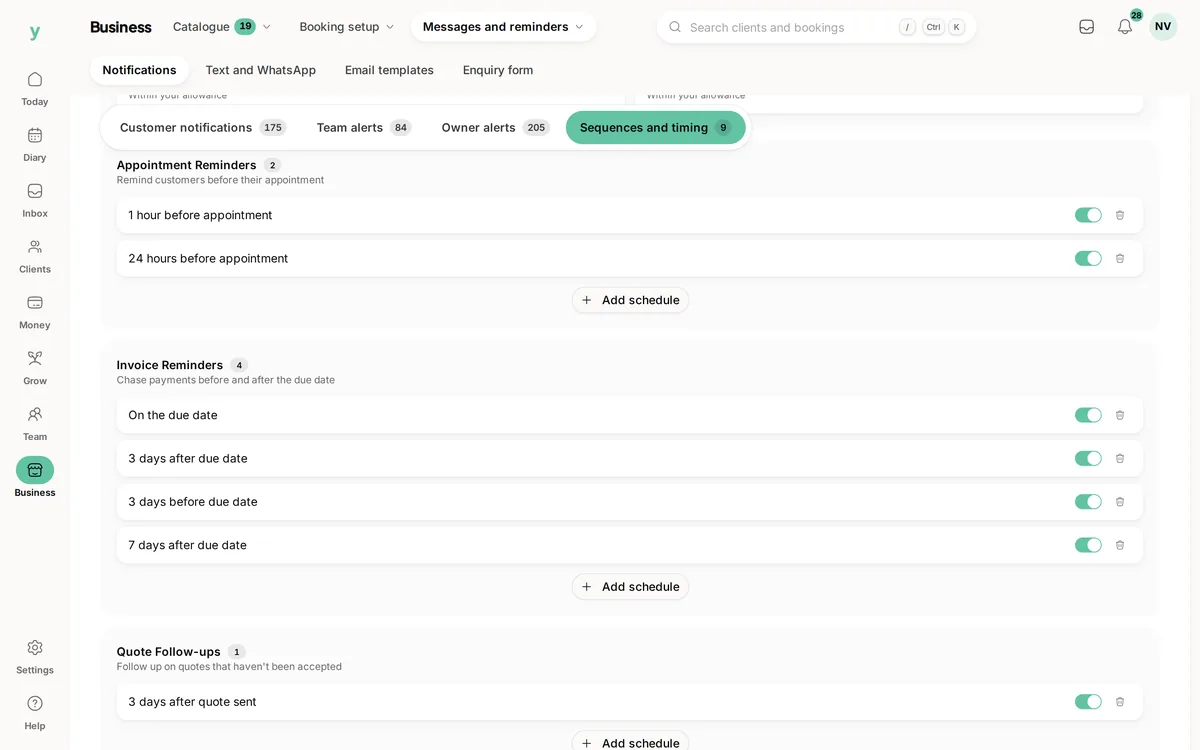
Convert the quote to the invoice and let the payment reminders do the chasing.
Customers are reminded before you arrive, so furniture is moved and rooms are clear.
The details that usually slow down a move: setup, pricing, bookings, records and how Youzse fits into your day.
Weighing up job management apps? What a trades business pays per user and per card payment, side by side. See how Youzse compares
Yes. Send a branded quote from your phone and let customers approve it online.
Try every feature on your plan free for 30 days, with no card needed.
We value your privacy
Cookies keep Youzse running, improve the platform and help deliver relevant content. Read our privacy policy and cookie policy.