
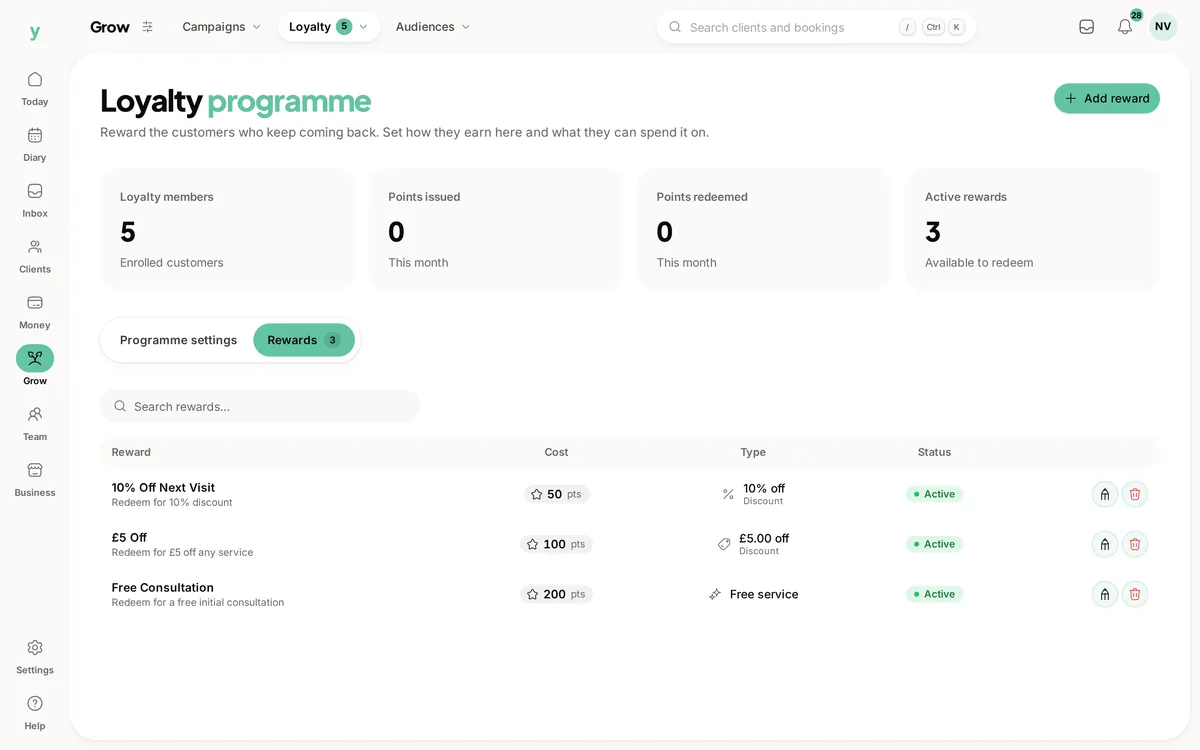
 Give the reward a clear promise
A reason to return
Choose a loyalty mode and rewards the team can explain.
Know who you are contacting, make the message useful and give regular customers something worth coming back for.
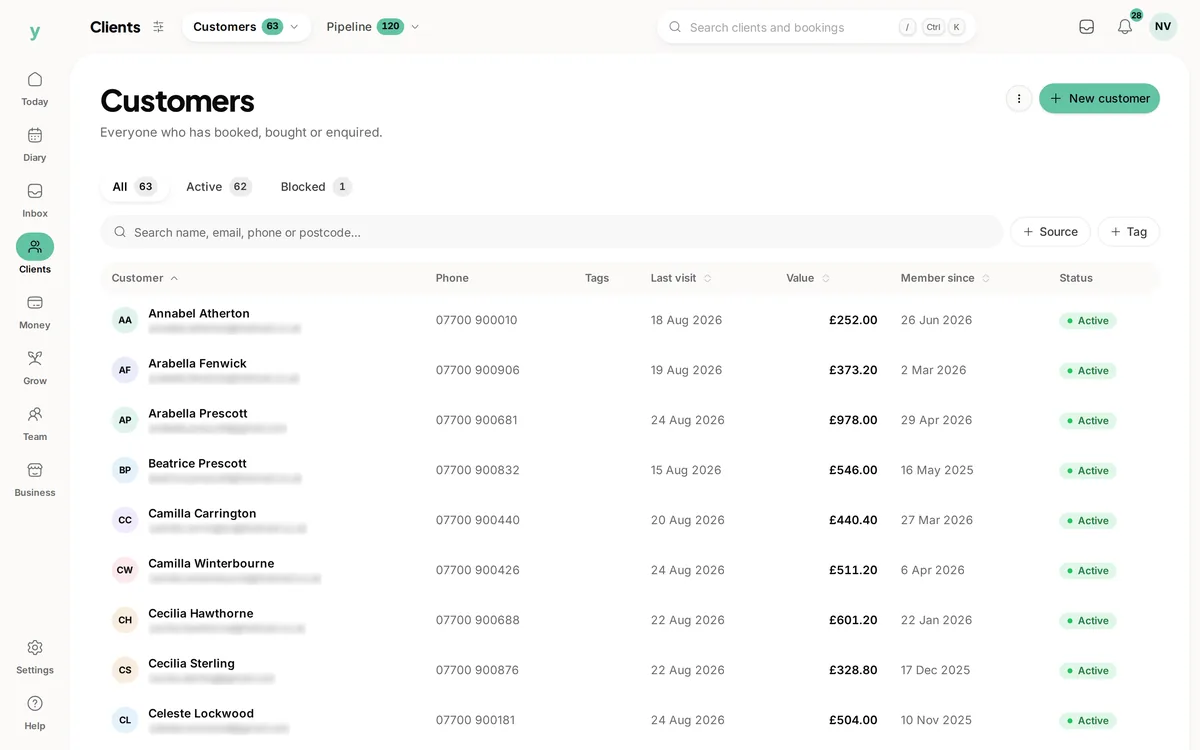
Real screens from The Cutting Room, our demo salon, with the numbers it shows today.
Give the reward a clear promiseChoose a loyalty mode and rewards the team can explain.
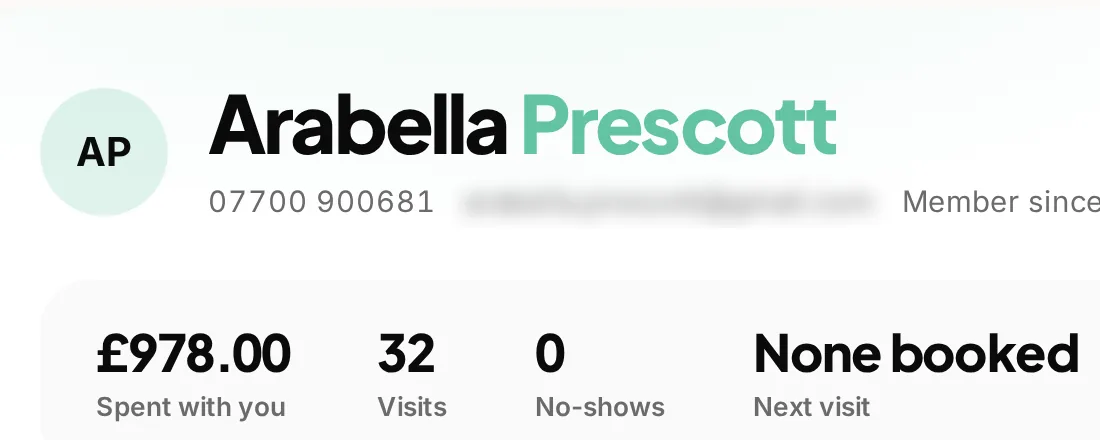 Review the customer history
Use recorded visits and spending as context for a useful follow up.
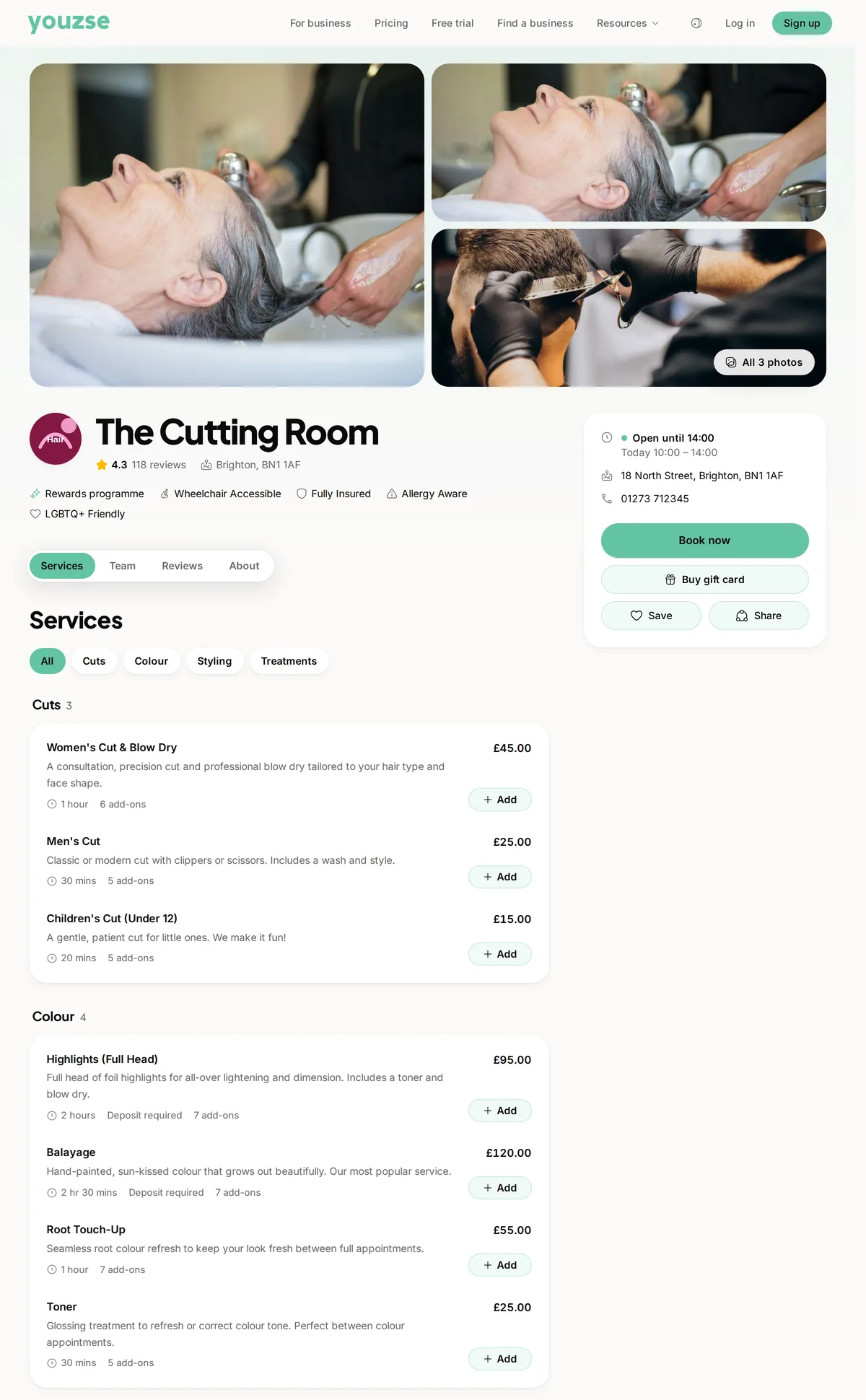 One link for the next visit
Give customers a booking page with your services, prices and available times.
Keeping a customer often starts with remembering the last visit and choosing a useful moment to get in touch. Youzse customer retention software connects customer history, audience segments, campaigns and loyalty tools. You can plan a relevant follow up from the records your business already keeps, rather than sending the same offer to everyone and hoping it fits.
Open the customer record before planning another message. Visits, spending and notes give context to the relationship. Someone who has just booked again needs a different conversation from someone who has not visited for several months. A broad customer label should not hide those differences.
Keep the records useful to the team. Use consistent tags and clear notes about the service, not assumptions about why a customer has not returned. A quiet period in the booking history is a reason to review the relationship, not evidence that the customer is unhappy or has gone elsewhere.
Marketing segments support filters such as the age of the last appointment, spending, tags and eligible services used. Combine the available filters to describe the audience you actually want to reach, then review the matching recipients. A saved segment gives the team a clearer starting point than a fresh spreadsheet each time.
Check what each filter measures. The last appointment filter is based on recorded appointments, and a spend filter depends on the stored value. Neither is a guess about a customer's future intentions. Keep the business reason for the segment clear so someone else can understand why it exists.
| Situation | Useful starting point | A question before sending |
|---|---|---|
| A regular customer has not visited recently | Appointment history and a suitable audience segment | Is there a useful reason to contact them and is the audience current? |
| A customer has booked again | Their next booking and reminder settings | Would a reminder help more than another promotion? |
| A customer has earned a reward | The loyalty balance and reward terms | Can the team explain what the reward includes and how to use it? |
| A service has spare availability | A relevant service audience and the actual diary | Can the people receiving the message book the times being offered? |
| A vehicle is approaching its next MOT | Garage Pro vehicle records and reminder setup | Are the due date and owner contact details correct? |
Use a campaign when there is a reason to contact a group of customers. Keep the message tied to the service and the audience. A reminder that a suitable appointment is available is more useful when it includes a clear next step and the business can actually offer the times it mentions.
Preview the message, check the recipients and review the channel before sending or scheduling. Campaign allowances depend on your plan. SMS and WhatsApp have usage charges and require the appropriate setup, so include channel costs in the decision rather than treating every contact method as interchangeable.
Campaign delivery checks channel consent and suppression records. Your team still needs to choose an appropriate audience and keep communication choices up to date. Being on the customer list is not by itself a reason to receive every promotion on every channel.
Review the contact details as well as the consent record when a message does not reach someone. A saved address may be old or mistyped. Keep routine booking information distinct from marketing, and use the purpose of the message to decide which workflow and settings are appropriate.
Youzse loyalty programmes offer points, stamps or cashback balances. Choose the earning mode that suits the service and set rewards the team can explain. A barber with similarly priced visits may prefer stamps, while a business with a wider range of appointment prices may prefer points based on spend.
Regular earning follows completed appointments. A booking alone is not an earned visit, and cashback is a balance in the programme rather than a bank payout. Keep the reward terms, earning rule and any expiry clear before inviting customers to join. The detailed loyalty page explains the modes and their boundaries.
A gift card holds value someone has purchased for future spending with your business. A loyalty reward recognises activity that has already earned something. Both can lead to another visit, but they make different promises and need their own explanation at reception.
Keep availability in mind when promoting either one. A gift card balance or an earned reward does not reserve a particular Saturday slot. Help the customer find a suitable booking and make any conditions clear, rather than promising that a promotion removes the need to plan a visit.
The booking link and configured reminders support the part after a customer decides to return. Check that services, staff availability and prices are current. A thoughtful invitation loses its usefulness if the customer cannot find the service or the team member mentioned in it.
For garages, Garage Pro MOT and service reminders use vehicle records. For an appointment business, the reminder belongs around a booked visit. Choose the tool that matches the situation rather than treating every customer follow up as the same sequence.
After a campaign, review its delivery information and the customer records relevant to the work. Do not assume a delivered message caused a later booking or that every returning customer came back because of a reward. Useful records help you ask better questions about what to try next.
Youzse brings the tools together; it does not guarantee repeat visits or a particular increase in sales. Keep the offer sustainable and start with one audience and one clear purpose. A message that fits the relationship is a better foundation than an ambitious promise you cannot measure.
A segment based on an older visit can change as customers book again or their records are updated. Review the current recipient information before launching the campaign rather than relying on a count noted several weeks earlier. Exclude a customer when the message no longer fits the relationship, even if they still match a broad tag.
Give the saved audience a name that explains its purpose. Someone covering your work should be able to understand the intended recipients and offer without reconstructing the original planning conversation. Clear names also make it easier to review an old campaign before copying its approach for another season.
Read customer feedback and reply to eligible native reviews.
Choose an earning rule and a reward you can explain clearly.
Purchased value for future visits, with a clear remaining balance.
Customer history and notes for a more useful conversation.
Keep routine reminders distinct from marketing campaigns.
The limits and the detail, answered before you spend an afternoon testing for them.
Marketing segments support filters based on the age of the last recorded appointment, alongside tags, spend and other supported fields. Review the matching recipients before using a segment for a campaign.
We value your privacy
Cookies keep Youzse running, improve the platform and help deliver relevant content. Read our privacy policy and cookie policy.