
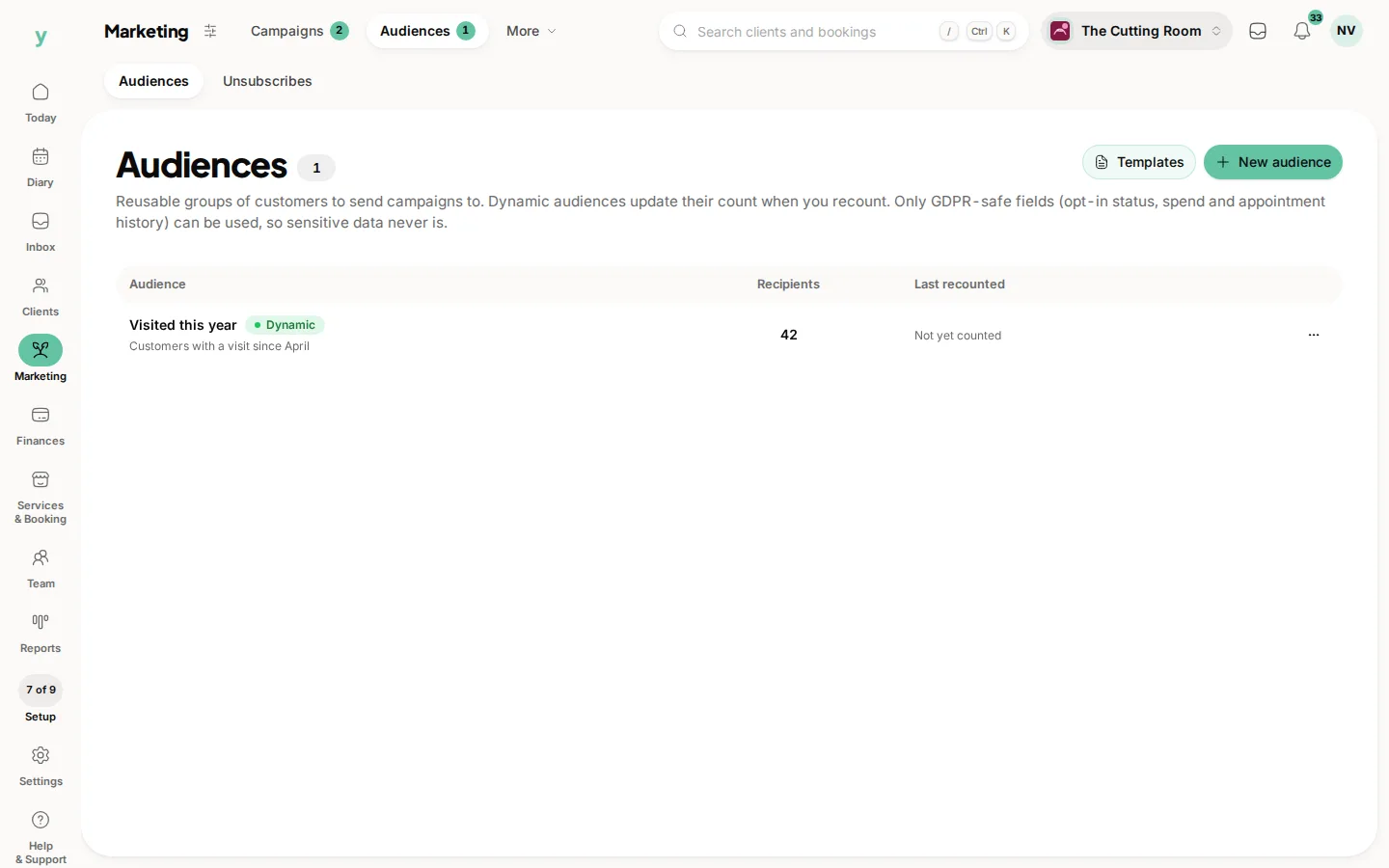
Go to Marketing, then Audiences. Each audience is a saved segment: a filter describing a group of customers, so you build the audience once and reuse it every time.
What you can filter on
Only fields that are safe to target with. Sensitive personal data is deliberately not available to segmentation, so a segment can never be built on health information or anything else it would be unlawful to use for marketing.
Segments worth having
- Customers who have not been in for six months
- Customers of one particular service
- Customers at one location, if you have more than one
- Your highest-spending customers
Why reusable matters
A segment you rebuild by hand each time drifts. Saving it means the lapsed-customer campaign you run every quarter measures the same thing each quarter, so the numbers actually compare.
Segment size is not send size
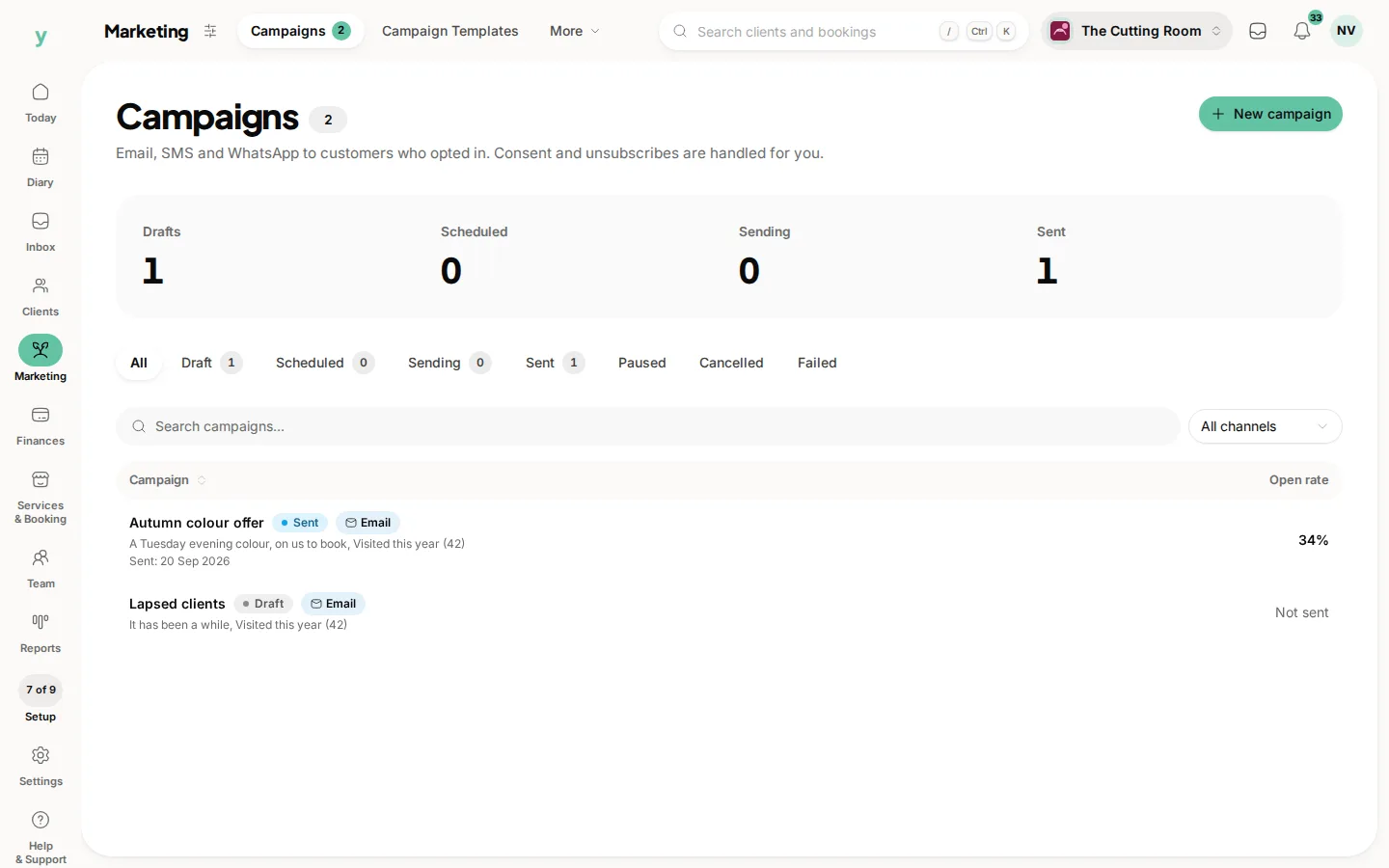
A segment tells you who matches. Consent and suppression are applied when the campaign sends, so the number reached is usually smaller. That is working as intended.
Common questions
Why can I not segment on a customer note?
Notes are free text and can hold anything, including sensitive information. Targeting on them is not offered, which is deliberate.
Can I combine filters?
Yes. Segments are built from several conditions together, which is how you get from everybody to the group you actually want.
Do segments update themselves?
A segment is a filter rather than a fixed list, so it reflects who matches at the time you use it.