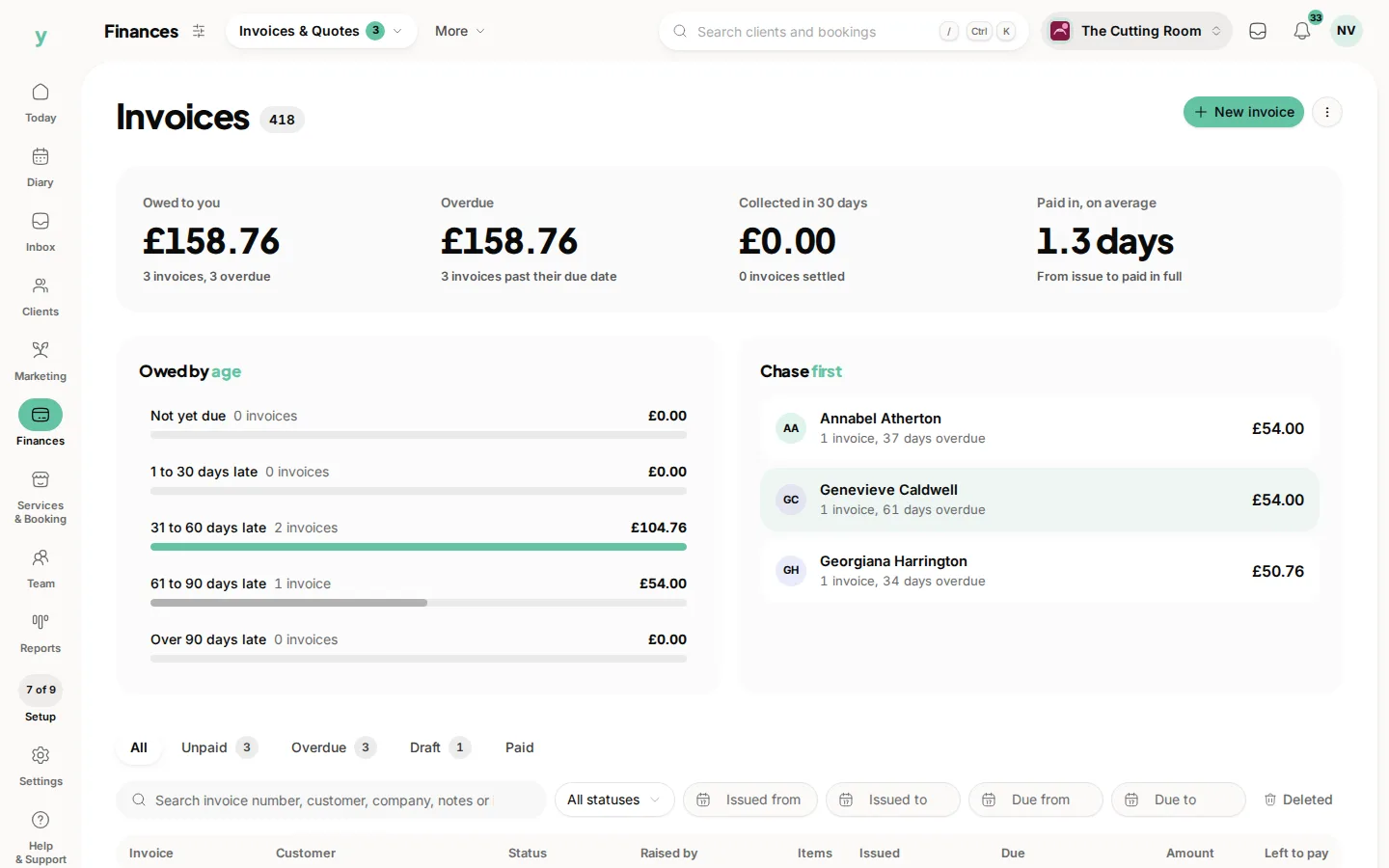
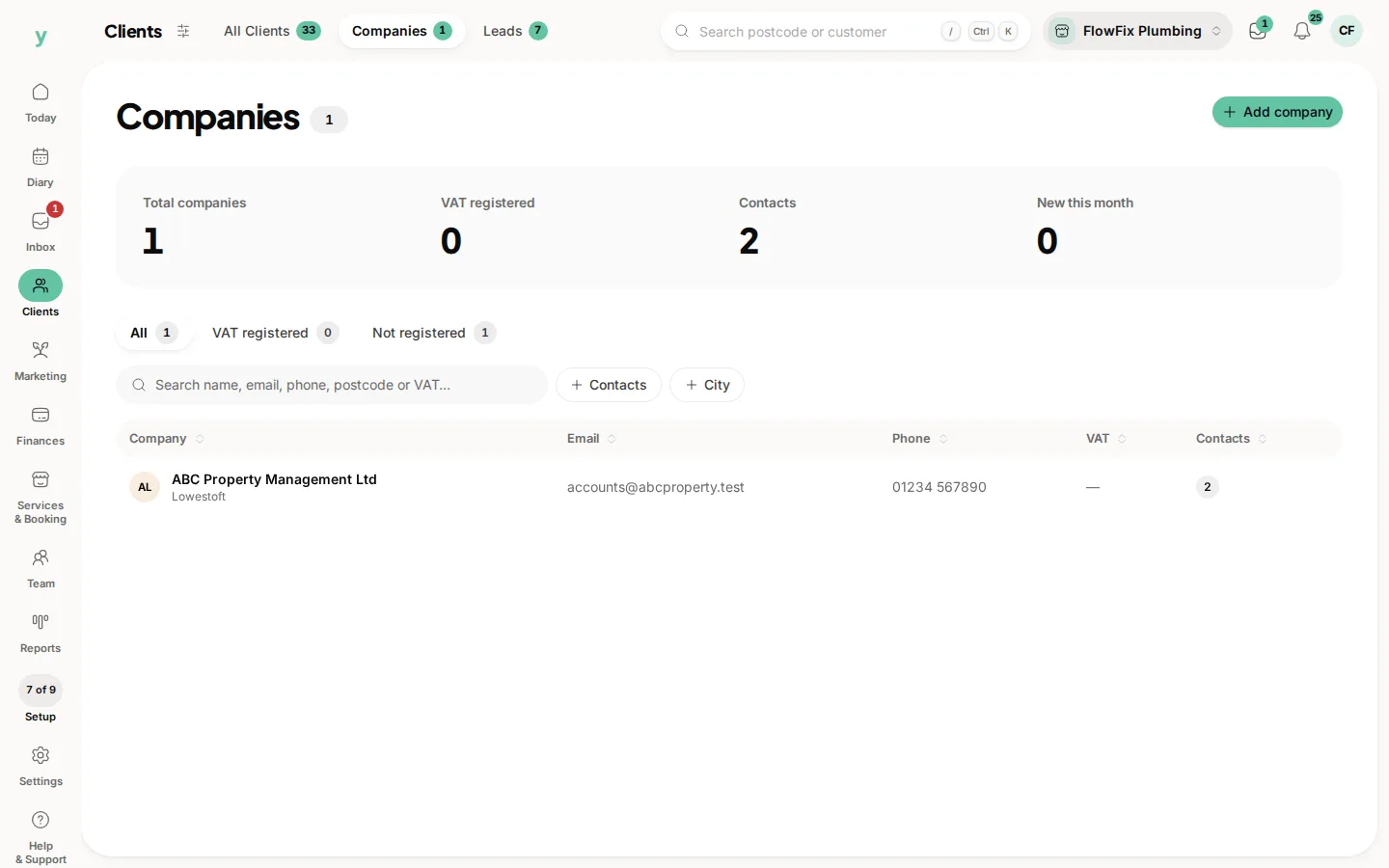
Go to Clients, then Companies. It holds business clients. Use it when your invoice needs to be addressed to a business rather than to the person who booked.
When you need it
A fleet booking cars in for servicing, a letting agent sending you jobs, a firm paying for staff treatments. The person you deal with is not the person who pays and the invoice has to be right for their accounts department.
What a company record holds
Name, contact details, billing address, VAT number and a registration reference. That is what makes an invoice acceptable to their finance team.
Linking people to companies
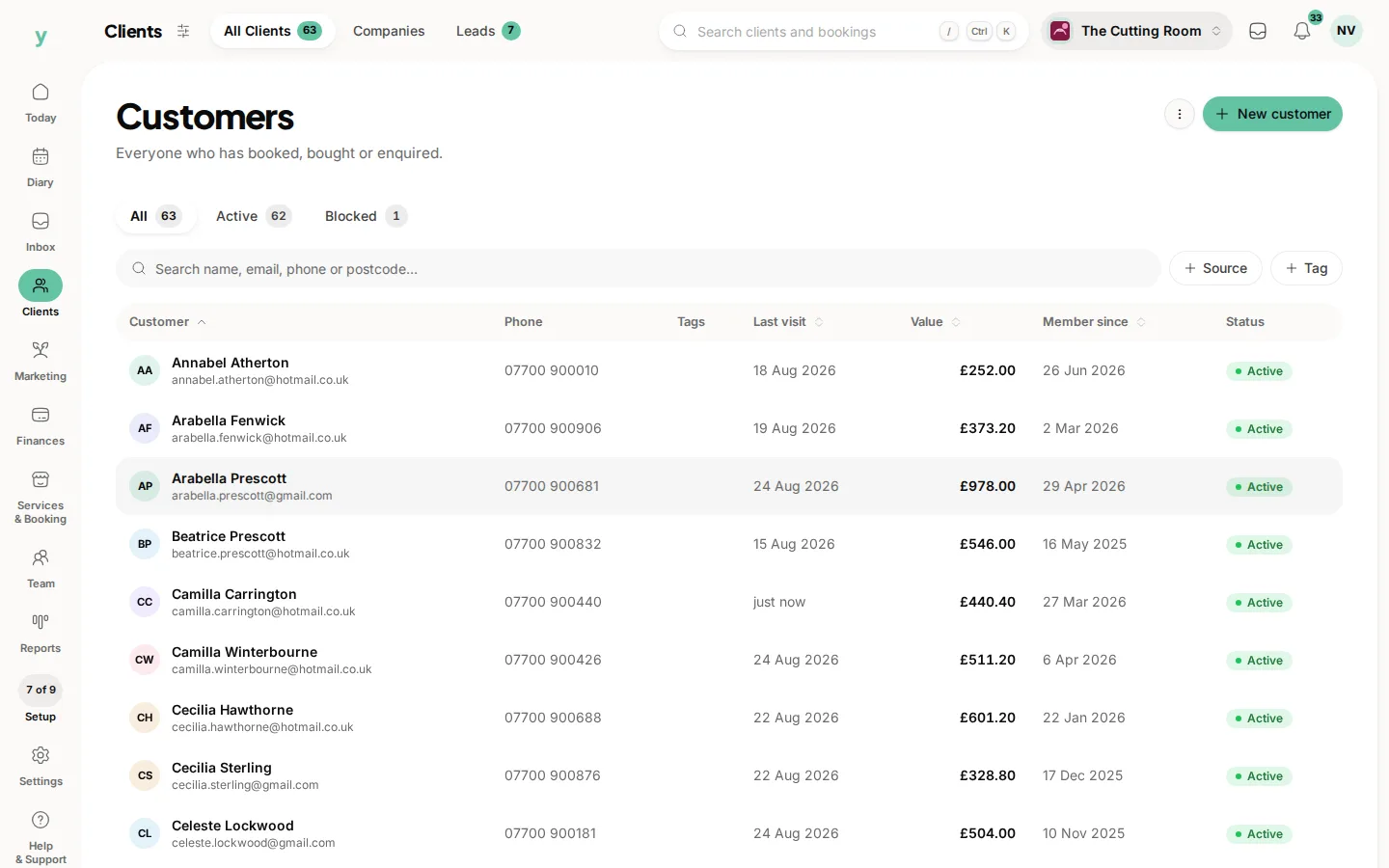
Customers can belong to a company. The individual keeps their own record and history. The invoice goes to the business.
Purchase order numbers
Many businesses will not pay an invoice without their own reference on it. Ask for it up front and put it on the invoice, because chasing that afterwards adds weeks.
Importing companies
Accounting exports from QuickBooks and Sage carry company records with VAT numbers. Import companies before customers so people attach to the right business.
Common questions
Do I need companies if I only serve the public?
No. Most salons and barbers never touch it. It is there for when a business becomes the payer.
Can one company have several contacts?
Yes. Several customers can belong to the same company, each keeping their own booking history.
Does the company get the booking confirmations?
No. Confirmations go to the person attending. Invoices go to the business.