
Most of what you earn should be an invoice, because that is what the customer pays against and what your reports already count. Other income is the rest: bank interest, a small cash job you never invoiced, a refund from a supplier. It is added to the tax year.
Where to find it
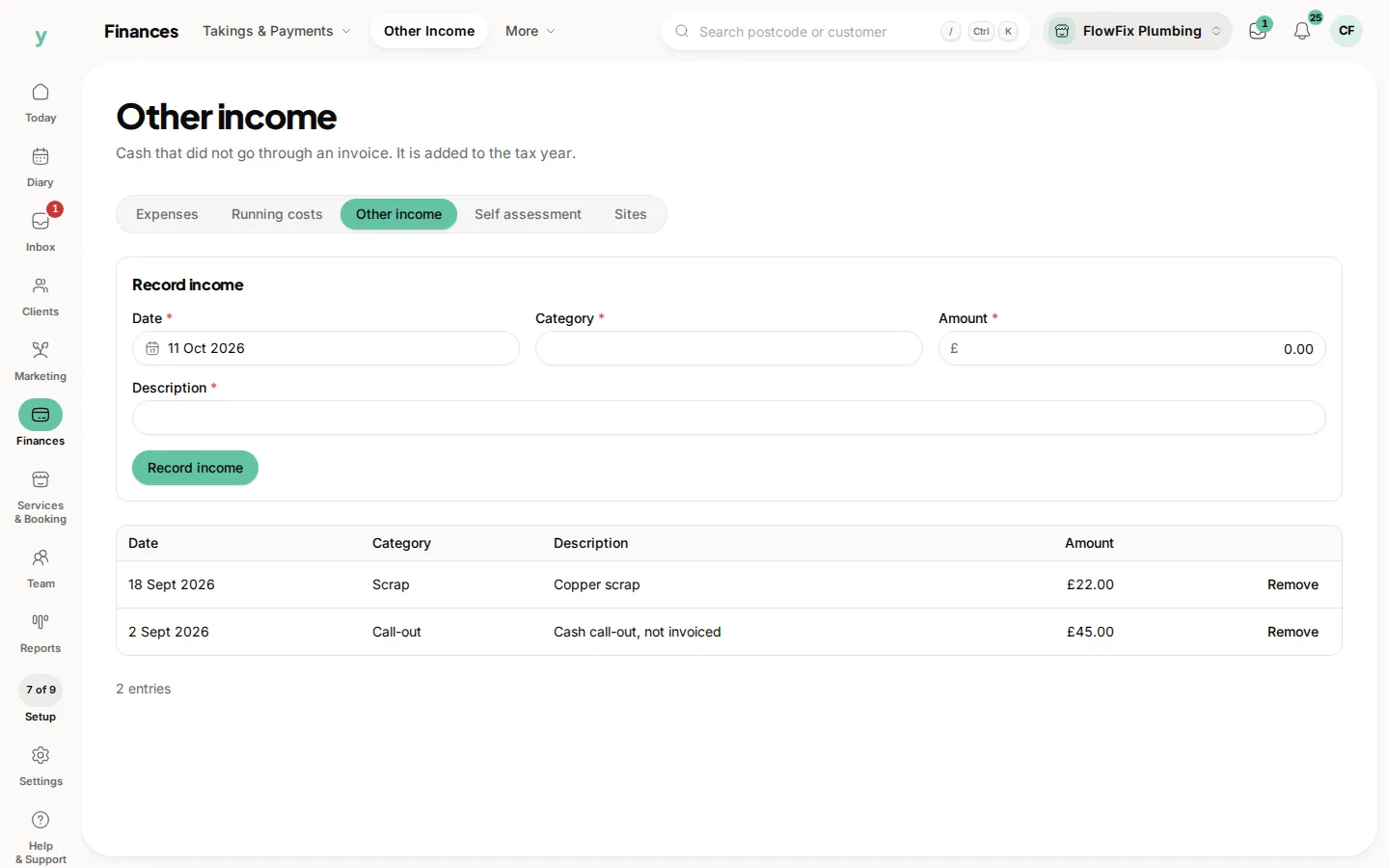
Go to Finances, then Other Income.
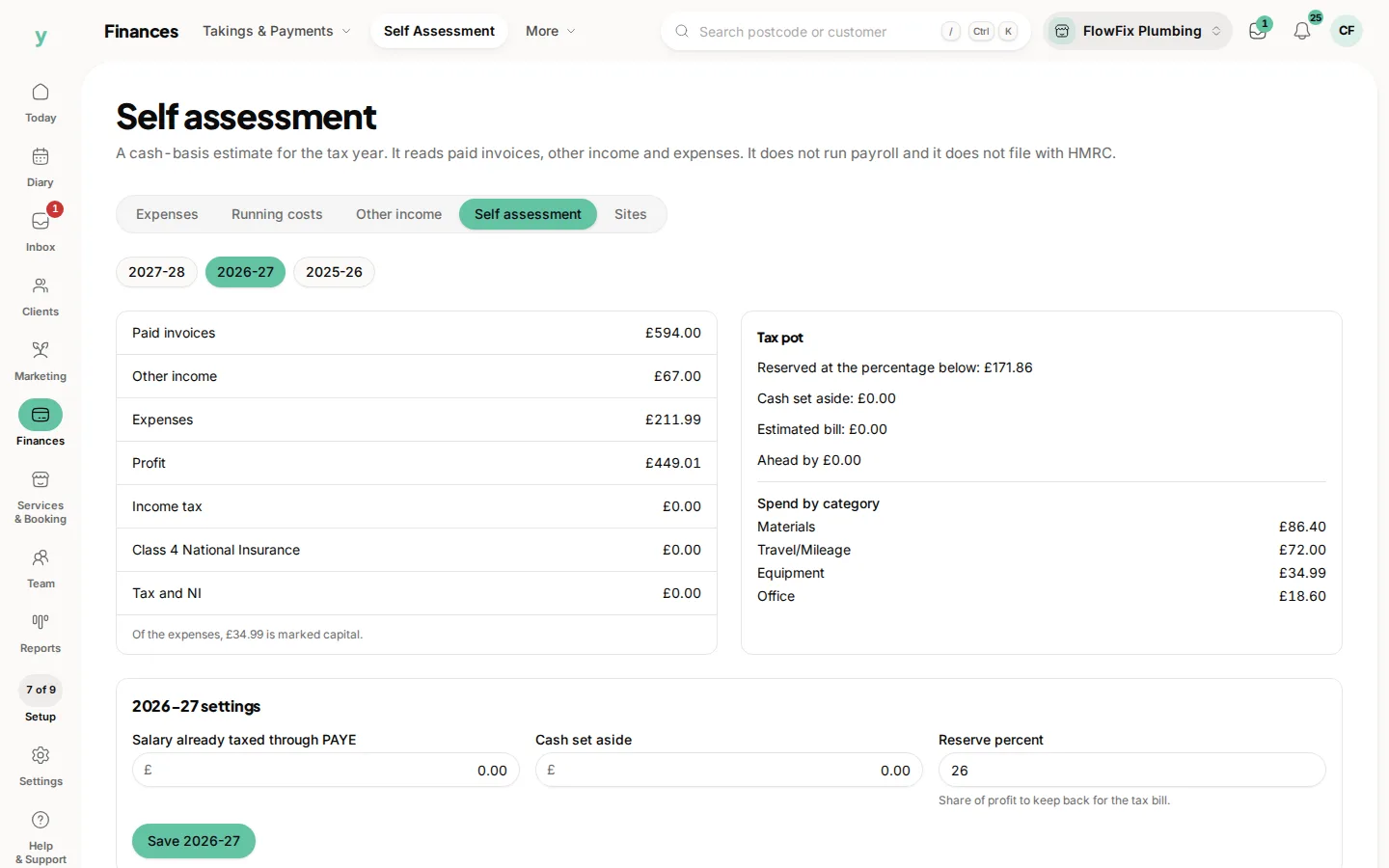
Enter the date, a category, a description and the amount, then choose Record income. It shows in the list and on Self assessment as its own line, separate from paid invoices, so you can see which is which.
If a customer paid you for work, raise an invoice instead. Other income is for money that has no invoice and never will.
Common questions
Does this create an invoice?
No. That is the point of it. Use an invoice when there is a customer and a piece of work. Use other income when there is only the money.
Can I attach a note of where it came from?
Yes. The description is the place for that, and you can find it again from the search on the page.